

There’s a particular kind of silence that exists in remote places. In the desert, it stretches wide and uninterrupted, settling into the spaces between conversations, footsteps, and thought. It’s the kind of quiet that invites you to slow down, not because you have to, but because there is nothing pushing you to move faster.
In environments like this, the way people spend their time begins to change. Without constant notifications, background noise, or digital distractions, attention shifts naturally toward what is present. Conversations become longer. Evenings feel fuller. And simple activities take on a different kind of meaning.
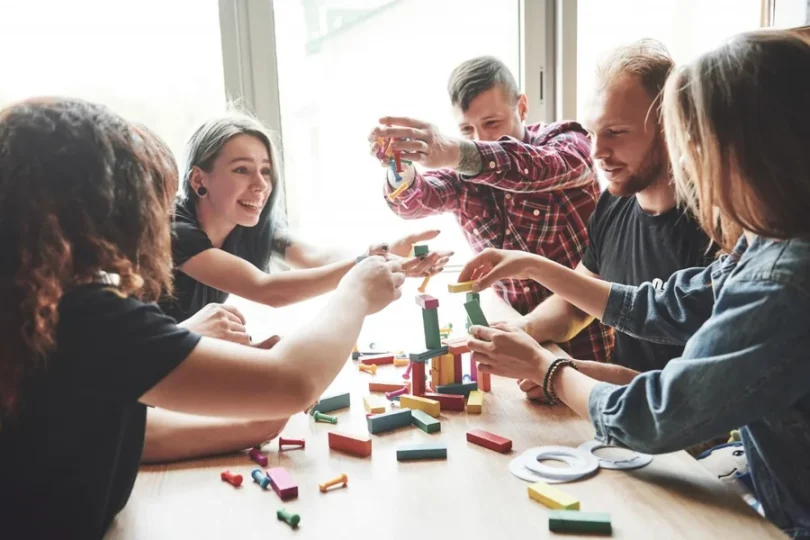
Among these, games, especially those that require nothing more than a deck of cards or a small set of pieces, become something more than entertainment. They become a way of connecting.
The Shift Away From Constant Stimulation
Modern life is built around stimulation. We move from one input to another, messages, videos, updates, rarely pausing long enough to fully engage with any one thing. While this pace can feel productive, it often leaves little room for deeper interaction.
In quieter environments, that pattern breaks. With fewer distractions, people begin to look for ways to engage that feel more intentional. Passive activities lose their appeal, replaced by those that require presence.
Games fit naturally into this shift. They ask for attention, but not in a demanding way. Instead, they create a shared focus that brings people into the same moment.
But even here, one familiar obstacle remains: understanding how to play. Without easy access to clear instructions, even simple games can stall before they begin. Playiro guides offer clear, straightforward explanations for card, board, and party games; they allow people to quickly align and begin playing without confusion. In settings where the goal is to relax and connect, this kind of simplicity makes a noticeable difference.
Evenings That Feel Different
Desert evenings carry a rhythm of their own. As the temperature drops and the light softens, the pace of the day gives way to something slower and more reflective.
These are the moments when games often come out. Not as a planned activity, but as something that emerges naturally. A deck of cards appears, someone suggests a game, and gradually, a group forms.
What follows is rarely about winning or losing. It’s about the experience itself, the quiet focus, the occasional burst of laughter, the subtle shifts in energy as the game unfolds.
In these settings, games become a way of marking time. They give shape to the evening without overwhelming it.
The Value of Shared Attention
One of the most noticeable differences between digital and analog experiences is the quality of attention they require. Digital activities often divide focus, pulling it in multiple directions at once. Games, by contrast, bring attention into a single space.
Everyone at the table is engaged with the same system, the same rules, the same unfolding sequence of events. This shared attention creates a sense of connection that is difficult to replicate elsewhere.
It also changes the nature of conversation. Instead of competing with distractions, it emerges organically from the activity itself. Comments, reactions, and observations become part of the experience, rather than separate from it.
Simplicity as a Form of Depth

There is a tendency to associate depth with complexity. But in quieter environments, simplicity often proves to be more powerful.
Simple games are easy to learn, quick to start, and adaptable to different groups. They do not require long explanations or extensive preparation. This allows participants to move directly into the experience, where the real value lies.
In fact, it is often this simplicity that creates space for deeper interaction. Without the need to focus on complicated mechanics, players are free to engage with each other more fully.
The Mental Benefits of Slowing Down
Spending time in low-stimulation environments has measurable benefits. Slower activities, especially those that involve interaction and focus, can help reduce stress and improve mental clarity.
According to the National Park Service, time spent in natural, quiet settings can support mental well-being by lowering stress levels and improving overall mood. When combined with social activities like games, these benefits are amplified.
The combination of environment and activity creates a unique kind of balance, one that supports both relaxation and engagement.
A Different Kind of Connection
In everyday life, connection is often mediated through devices. Messages, comments, and notifications create a constant stream of interaction, but they rarely offer the depth of in-person experiences.
Games provide an alternative. They create a space where interaction is immediate, responsive, and shared. Players react to each other in real time, building a sense of connection that feels more grounded.
This is especially meaningful in environments where distractions are minimal. Without competing inputs, attention naturally shifts toward the people present.
Why These Moments Stay With Us
Long after the game ends, it is not the rules that people remember. It is the moments, the unexpected outcome, the shared laughter, the quiet satisfaction of being part of something simple and complete.
These memories are shaped not by the complexity of the activity, but by the quality of the experience.
In quieter places, where life moves at a different pace, these moments tend to stand out more clearly. They are not rushed or overshadowed by what comes next. They are allowed to exist fully.
Choosing to unplug, even temporarily, changes how we experience time and connection. In the absence of constant stimulation, simple activities take on greater significance.
Games, with their balance of structure and interaction, offer a way to engage that feels both intentional and natural. When they are easy to understand and accessible to everyone involved, they become more than just a way to pass the time.
They become a way to share it. And in places where silence stretches wide and the pace slows down, that shared time often becomes the most meaningful part of all.