
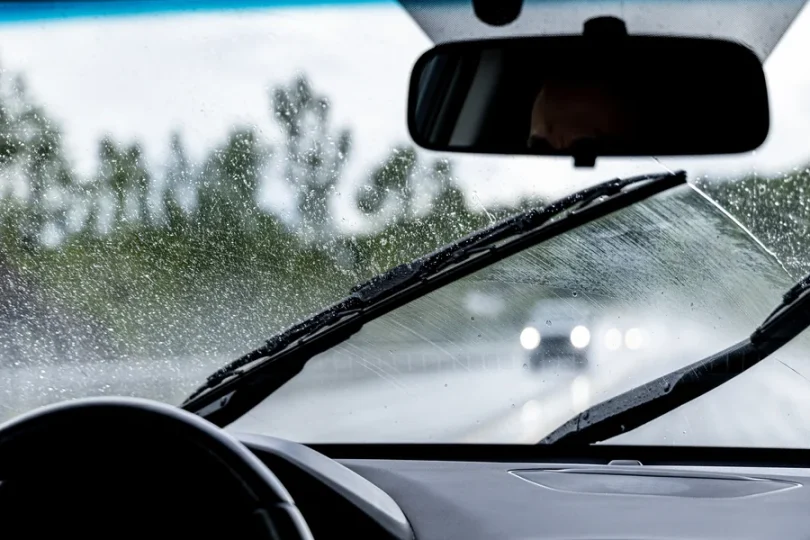

When Visibility Fails: New Data Shows How Bad Windshield Wipers Contribute to Crashes, Fatalities, and Statewide Safety Gaps
A new national analysis from Anidjar & Levine reveals a safety threat hiding in plain sight on American roads. While distracted driving, speeding, and impaired driving often dominate public attention, the study shows that something far more basic is contributing to more than a million crashes every year: worn, damaged, or neglected windshield wipers.
The findings show that poor wiper performance is linked to nearly 1.2 million crashes and more than 6,000 fatalities annually. At the same time, 46 million drivers may be operating vehicles with impaired visibility during bad weather. The issue is compounded by the fact that 24 states have no vehicle safety inspection requirements, leaving millions of defective vehicles on the road with no oversight.
This report examines the data behind the study, the states most affected, the role of weather, and the maintenance habits that allow a simple piece of equipment to become a deadly risk.
A National Visibility Problem Affecting Tens of Millions
Windshield wipers are one of the simplest safety devices on a vehicle, yet the study shows that they are also one of the most neglected. According to the analysis, around 90 percent of driving decisions rely on vision, and poor visibility is linked to nearly half of all fatal crashes.
Key national findings
- One in five vehicles inspected during National Car Care Month had faulty wipers or washing systems.
- Roughly 46 million of the 231 million registered vehicles in the U.S. had deficient wipers.
- Drivers often wait years to replace wipers that were already showing signs of failure within six to twelve months.
- Wipers should be replaced every 6–12 months, yet many drivers ignore early warning signs like streaking, skipping, or torn rubber.
The study emphasizes that wipers are not optional accessories. They are essential safety equipment, especially in regions with heavy rain, snow, dust, or debris.
Why Drivers Replace Wipers — and Why Many Wait Too Long
The study includes consumer behavior data that helps explain why so many vehicles have failing wipers. According to IMR Inc.’s Continuing Consumer Automotive Maintenance Survey, drivers replace wipers for a mix of reasons, but many wait until failure occurs.
Reasons for wiper replacement
- Preventative maintenance motivated more than 40 percent of both DIY and DIFM drivers.
- Wiper failure was the reason for 35 percent of DIY replacements and 30.8 percent of DIFM replacements.
- Upgrades motivated more than 20 percent of DIYers and nearly 25 percent of DIFM customers, even when their current wipers were still functional.
The study notes that waiting for failure is a dangerous strategy. In extreme cases, malfunctioning wipers have directly contributed to fatal crashes.
Fatalities Directly Linked to Bad Wipers
Federal crash data shows that 12 states reported 16 fatalities between 2019 and 2023 that were directly attributed to inadequate wipers during bad weather. Wisconsin recorded the highest number of these deaths and is also one of the states with no safety inspection requirements.
While the number may seem small compared to national crash totals, the study argues that these are only the cases where wipers were explicitly cited as the cause. The true number is likely higher, given how often visibility plays a role in weather‑related crashes.
The Inspection Gap Across the United States
Vehicle safety inspections are designed to ensure that cars on the road meet basic safety standards, including functioning wipers. Yet 24 states have no such requirements, leaving millions of vehicles unmonitored.
States with no safety inspection requirements
Alabama, Alaska, Arkansas, Florida, Idaho, Iowa, Kansas, Kentucky, Michigan, Minnesota, Mississippi, Montana, Nebraska, New Hampshire, North Dakota, Ohio, Oklahoma, South Carolina, South Dakota, Tennessee, Utah, Washington, Wisconsin, Wyoming.
The study notes that states with mandatory inspections show a 5 to 9 percent reduction in crash rates compared to states without them. The average annual cost of an inspection is relatively low, ranging from $20 to $70.
Fatality rate comparison
| State | Inspection Requirement | Fatality Rate (per 100k) |
|---|---|---|
| South Carolina | None | 24.9 |
| California | Routine inspections | 10.9 |
The contrast highlights how even minimal oversight can influence safety outcomes.
Weather Intensifies the Risk
Weather plays a major role in crash outcomes. According to the study, over 20 percent of all vehicle crashes are due to adverse weather conditions.
Rain‑related fatalities (2019–2023)
More than 12,900 fatal crashes cited rain as a contributing factor. The states with the highest rain‑related fatality rates per 100,000 people include:
| State | Fatalities | Rate per 100K |
|---|---|---|
| Mississippi | 289 | 9.83 |
| Alabama | 453 | 8.87 |
| Arkansas | 256 | 8.34 |
| South Carolina | 431 | 8.02 |
| Kentucky | 351 | 7.75 |
| Tennessee | 536 | 7.52 |
All six states have no mandatory safety inspections.
Snow‑related fatalities
Between 2019 and 2023, there were 1,515 snow‑related fatalities. The highest rates were recorded in:
| State | Fatalities | Rate per 100K |
|---|---|---|
| Wyoming | 47 | 8.05 |
| Alaska | 34 | 4.64 |
| Montana | 41 | 3.62 |
None of these states require safety inspections.
Why Wiper Maintenance Matters More Than Drivers Realize
The study concludes that inadequate windshield wipers are a preventable cause of crashes and fatalities. With 46 million vehicles potentially operating with impaired visibility and 24 states lacking inspection requirements, the responsibility falls heavily on drivers.
Key takeaways
- Wipers should be replaced every 6–12 months.
- Drivers often wait years, creating unnecessary risk.
- States without inspections see higher fatality rates, especially in bad weather.
- Something as simple as a worn wiper blade can be the difference between life and death.
A Preventable Crisis With a Simple Fix
The findings from Anidjar & Levine show that the dangers posed by bad windshield wipers are both widespread and preventable. The data suggests that mandatory inspections, better maintenance habits, and greater public awareness could significantly reduce crash rates.
Until such changes are adopted, millions of drivers remain at risk every time rain, snow, or debris hits their windshield.