
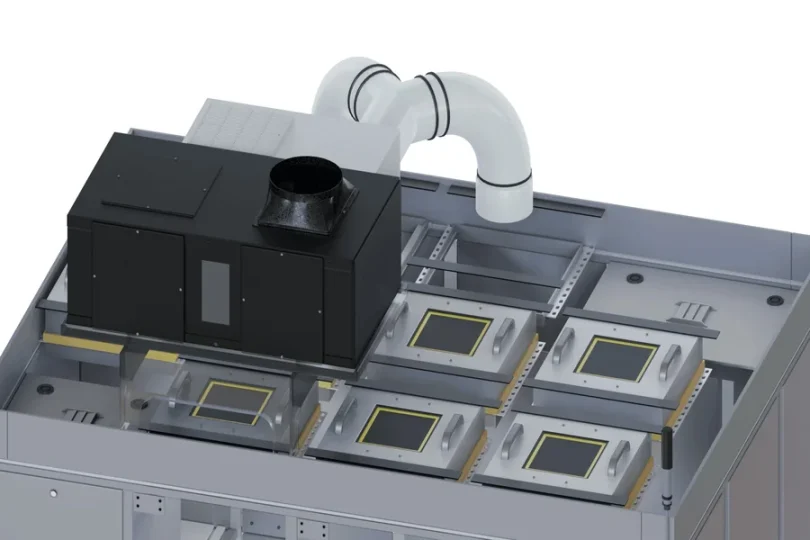

Manufacturing pharmaceutical products requires maintaining precise atmospheric conditions that standard building systems cannot reliably achieve. Traditional HVAC systems, designed for general comfort cooling and heating, often leave pharmaceutical facilities struggling with temperature fluctuations, humidity variations, and contamination risks that can compromise product integrity and regulatory compliance.
The gap between what standard climate systems deliver and what pharmaceutical manufacturing actually demands creates operational challenges that affect everything from batch consistency to audit outcomes. Understanding these differences becomes critical when facilities face decisions about system upgrades, expansions, or new installations where the wrong choice can lead to costly production delays and compliance issues.
Understanding the Fundamental Differences Between Standard HVAC and Specialized Environmental Control
Standard HVAC systems operate on broad comfort parameters, typically maintaining temperatures within several degrees and humidity levels that fluctuate with seasonal conditions. These systems cycle on and off based on thermostat readings and focus primarily on occupant comfort rather than process requirements. Pharma environmental control units function differently, maintaining continuous operation with precise control loops that monitor and adjust multiple environmental parameters simultaneously.
Environmental control systems designed for pharmaceutical applications incorporate redundant sensors, backup systems, and fail-safe mechanisms that prevent the environmental drift common in standard HVAC installations. While a typical office building might experience temperature swings of five to ten degrees during normal operation, pharmaceutical processes often require stability within one degree or less, with corresponding precision in humidity, air pressure, and particulate control.
The control logic also differs significantly between these systems. Standard HVAC relies on simple on-off cycling or basic modulation, while pharmaceutical environmental control employs continuous modulation across multiple variables with predictive algorithms that anticipate and prevent environmental deviation before it affects production processes.
Air Quality Management and Filtration Requirements
Pharmaceutical manufacturing requires air quality standards that exceed typical commercial building requirements by several orders of magnitude. Environmental control systems incorporate multi-stage filtration including HEPA filters, with monitoring systems that track filter performance and alert operators to maintenance needs before air quality degrades.
Standard HVAC filtration focuses on removing common airborne particles and maintaining general indoor air quality. Pharmaceutical environmental systems must eliminate microorganisms, control particle counts at specific size ranges, and maintain sterile conditions in critical areas where product exposure occurs.
Pressure Control and Containment
Managing air pressure differentials between spaces represents another critical distinction. Pharmaceutical facilities require precise pressure cascades that prevent cross-contamination between manufacturing areas, with some spaces maintained at positive pressure to exclude contaminants and others at negative pressure to contain potentially hazardous materials.
Standard building HVAC systems typically maintain slight positive pressure throughout conditioned spaces without the complex zoning and differential control necessary for pharmaceutical operations. This simplified approach cannot support the containment strategies essential for pharmaceutical manufacturing compliance.
Why Standard Systems Fail in Pharmaceutical Applications
The failure of standard HVAC systems in pharmaceutical environments stems from their inability to maintain the consistent conditions required for regulatory compliance and product quality. Temperature variations that seem minor in office environments can alter chemical reaction rates, affect dissolution profiles, and change the physical properties of pharmaceutical compounds during manufacturing.
Humidity fluctuations present particular challenges for pharmaceutical processes. Many active pharmaceutical ingredients absorb moisture from the air, changing their potency, stability, and processing characteristics. Standard HVAC systems often struggle to maintain consistent humidity levels, especially during seasonal transitions or when outdoor conditions change rapidly.
The cycling behavior typical of standard HVAC systems creates additional problems in pharmaceutical manufacturing. Each system startup and shutdown cycle introduces environmental instability that can affect sensitive processes. Products requiring extended processing times or precise environmental conditions cannot tolerate these fluctuations without quality impacts.
Regulatory Compliance Challenges
Pharmaceutical manufacturing operates under strict regulatory oversight that requires documented environmental control and extensive validation of all systems affecting product quality. Standard HVAC systems typically lack the monitoring, documentation, and validation capabilities required for pharmaceutical compliance.
Environmental monitoring in pharmaceutical facilities must provide continuous data logging, alarm systems for out-of-specification conditions, and detailed records suitable for regulatory inspection. Standard building systems rarely include these features and cannot be easily retrofitted to meet pharmaceutical documentation requirements.
Contamination Control Limitations
Cross-contamination prevention requires environmental systems that can maintain strict separation between different manufacturing areas and products. Standard HVAC systems often use common return air paths and lack the compartmentalization necessary to prevent airborne contamination between spaces.
The materials and construction methods used in standard HVAC installations may not be suitable for pharmaceutical cleaning and sanitization procedures. Environmental control systems for pharmaceutical use incorporate cleanable surfaces, sealed ductwork, and materials compatible with pharmaceutical cleaning agents and validation procedures.
The Hidden Costs of Choosing Standard HVAC
Facilities that select standard HVAC systems for pharmaceutical applications often discover additional costs that weren’t apparent during initial system evaluation. Product quality issues resulting from environmental variation can require batch reworking, extended testing, or product disposal, costs that quickly exceed the initial savings from choosing less expensive climate control equipment.
Regulatory compliance issues create another layer of unexpected expense. Facilities may need extensive system modifications, additional monitoring equipment, or complete system replacement to meet pharmaceutical regulatory requirements. These retrofits typically cost significantly more than installing appropriate environmental control systems initially.
Maintenance and operational costs also tend to be higher when standard systems operate in pharmaceutical environments. The precision required often pushes standard equipment beyond its intended operating range, leading to more frequent repairs, shorter equipment life, and higher energy consumption as systems work harder to maintain specifications they weren’t designed to achieve.
Production Disruption and Downtime
Environmental system failures in pharmaceutical manufacturing can shut down production lines until conditions return to specification. Standard HVAC systems, lacking the redundancy and reliability features of pharmaceutical environmental control equipment, experience more frequent failures and longer recovery times.
The time required to restore proper environmental conditions after a system failure varies significantly between standard and specialized systems. Environmental control systems designed for pharmaceutical use typically include rapid recovery capabilities and backup systems that minimize production downtime when problems occur.
Quality Control and Testing Costs
Inconsistent environmental conditions require additional quality control testing to ensure product specifications remain within acceptable ranges despite environmental variations. This additional testing increases both labor costs and material consumption while extending production timelines.
Some pharmaceutical processes may require environmental qualification studies to demonstrate that standard HVAC systems can maintain adequate control. These studies represent significant costs in both time and resources, often revealing system limitations that require correction before production can begin.
Key Performance Differences in Real-World Operations
Environmental control systems designed for pharmaceutical applications demonstrate measurably different performance characteristics compared to standard HVAC installations. Temperature stability represents one of the most obvious differences, with pharmaceutical systems maintaining setpoints within narrow ranges regardless of external conditions or internal heat loads.
Response time to environmental disturbances also differs significantly between system types. When doors open, equipment starts, or other disruptions occur, pharmaceutical environmental control systems typically restore specified conditions much faster than standard systems, minimizing the duration of out-of-specification conditions.
Energy efficiency often improves with pharmaceutical environmental control systems despite their more precise operation. These systems incorporate variable speed drives, advanced control algorithms, and optimized equipment sizing that can reduce energy consumption compared to oversized standard HVAC systems cycling on and off frequently.
Monitoring and Documentation Capabilities
Real-time monitoring capabilities differ substantially between standard and pharmaceutical environmental systems. Pharmaceutical systems provide continuous data logging, trending analysis, and alarm management that enables proactive maintenance and regulatory compliance documentation.
The granularity of control and monitoring in pharmaceutical systems allows operators to identify and address minor variations before they become significant problems. Standard systems typically lack this level of detail, making it difficult to optimize performance or prevent failures.
Reliability and Redundancy Features
Pharmaceutical environmental control systems incorporate redundancy at multiple levels, from sensors and controls to major equipment components. This redundancy ensures continued operation even when individual components fail, maintaining environmental conditions during equipment maintenance or unexpected failures.
Standard HVAC systems rarely include the same level of redundancy, making them more vulnerable to single-point failures that can disrupt pharmaceutical manufacturing operations. The cost of production interruption typically far exceeds the additional investment in redundant environmental control systems.
Making the Right System Choice for Pharmaceutical Applications
Selecting appropriate environmental control systems for pharmaceutical manufacturing requires understanding both current operational needs and future regulatory requirements. Facilities planning expansions or new installations should consider the total cost of ownership including compliance, maintenance, and operational factors rather than focusing solely on initial equipment costs.
The evaluation process should include assessment of existing manufacturing processes, future production plans, and regulatory requirements specific to the products being manufactured. Different pharmaceutical processes have varying environmental requirements, and systems should be designed to accommodate the most stringent specifications anticipated over the system’s operational life.
Integration with existing facility systems represents another important consideration. Pharmaceutical environmental control systems must work effectively with fire suppression, security, and other building systems while maintaining their primary function of environmental control. This integration requires careful planning and coordination during system design and installation.
Validation and Qualification Requirements
Environmental control systems for pharmaceutical use must undergo validation procedures that demonstrate their ability to maintain specified conditions consistently over time. This validation process requires detailed documentation, performance testing, and ongoing monitoring that standard HVAC systems cannot typically support.
The qualification process includes installation qualification, operational qualification, and performance qualification phases that verify system installation, operation, and long-term performance. Systems must be designed from the outset to support these validation requirements rather than attempting to retrofit validation capabilities later.
Future Flexibility and Expansion Considerations
Pharmaceutical manufacturing facilities often require modifications to accommodate new products, process changes, or capacity increases. Environmental control systems should provide flexibility for future modifications without requiring complete system replacement or extensive revalidation.
Modular system designs allow for capacity expansion and configuration changes while maintaining the validated performance of existing system components. This flexibility reduces the cost and complexity of facility modifications compared to systems that require complete replacement when changes are needed.
Conclusion
The choice between standard HVAC and pharmaceutical environmental control systems ultimately determines a facility’s ability to maintain consistent production quality, regulatory compliance, and operational efficiency. While standard systems may appear cost-effective initially, the hidden costs of quality issues, compliance problems, and operational disruptions typically exceed the additional investment required for appropriate environmental control systems.
Pharmaceutical manufacturing demands environmental precision that standard building systems cannot reliably deliver. Temperature stability, humidity control, air quality management, and pressure differentials all require specialized equipment and control strategies designed specifically for pharmaceutical applications. Facilities that recognize these requirements and invest in appropriate environmental control systems position themselves for more reliable operations, better regulatory compliance, and ultimately lower total cost of ownership over the system’s operational life.
The decision should be based on a comprehensive understanding of both immediate and long-term operational requirements, regulatory obligations, and the true cost of environmental system failures in pharmaceutical manufacturing environments. Making the right choice requires looking beyond initial equipment costs to consider the total impact on manufacturing operations, product quality, and regulatory compliance.