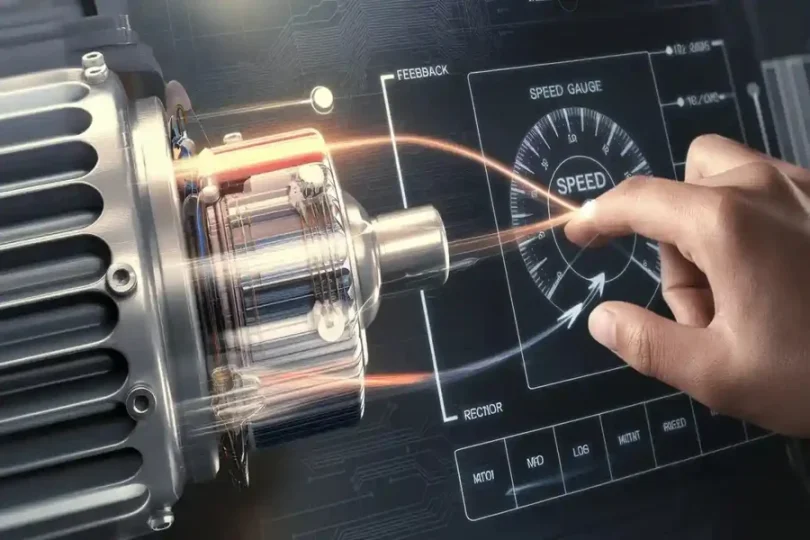

Manufacturing operations across the United States face mounting pressure to reduce unplanned downtime while maintaining consistent output quality. Motor control systems represent a critical junction where these objectives either succeed or fail spectacularly. When production lines stop unexpectedly or product quality varies beyond acceptable tolerances, the root cause often traces back to inadequate motor controller selection decisions made months or years earlier.
The transition from traditional brushed motors to brushless alternatives has created new selection challenges that many facility managers and engineering teams underestimate. While brushless motors offer superior reliability and performance characteristics, their controllers require more sophisticated evaluation criteria than their brushed counterparts. The consequences of poor selection decisions compound over time, affecting everything from maintenance schedules to energy costs and worker safety protocols.
These selection mistakes persist despite decades of technological advancement, largely because decision-making processes have not evolved alongside the technology. Understanding where these decisions typically go wrong provides a foundation for more reliable outcomes and fewer costly surprises during implementation and operation.
Overlooking Application-Specific Operating Conditions
Most controller selection processes begin with matching basic specifications like voltage and current ratings, but this approach consistently leads to operational problems. Industrial brushless motor controller performance depends heavily on environmental factors and duty cycle characteristics that extend far beyond simple electrical parameters. Controllers that function perfectly in laboratory conditions may fail repeatedly when subjected to the thermal cycling, vibration, and contamination levels present in actual manufacturing environments.
Temperature fluctuations represent one of the most underestimated challenges in controller selection. Manufacturing facilities often experience significant temperature swings throughout production cycles, seasonal changes, and varying heat loads from adjacent equipment. Controllers rated for ambient temperature operation may experience premature failure when installed near furnaces, welding stations, or other heat sources that create localized hot spots.
Environmental Stress Factors That Compromise Controller Reliability
Moisture and chemical exposure create additional complications that standard specifications rarely address adequately. Food processing facilities, chemical plants, and outdoor applications subject controllers to corrosive atmospheres that gradually degrade electrical connections and internal components. Controllers that appear suitable based on IP ratings may still experience accelerated wear when specific chemical combinations interact with housing materials or internal components over extended periods.
Vibration and shock loads from nearby machinery create mechanical stress that affects both internal component mounting and external connection integrity. Facilities with heavy press operations, impact equipment, or high-speed machinery generate vibration patterns that can cause fatigue failures in controllers not specifically designed for such environments.
Duty Cycle Mismatches That Lead to Premature Failure
Controllers designed for continuous operation may overheat when subjected to rapid start-stop cycles, while those optimized for intermittent use may not provide adequate performance during sustained high-load periods. Manufacturing processes with varying load profiles require controllers capable of handling both peak demands and extended operation periods without performance degradation.
Inadequate Integration Planning With Existing Control Systems
Controller integration failures represent some of the costliest mistakes in industrial motor applications. Many facilities approach controller selection as an isolated component decision rather than evaluating how new controllers will interact with existing programmable logic controllers, human-machine interfaces, and safety systems. This compartmentalized thinking leads to compatibility problems that become apparent only during commissioning or early operation phases.
Communication protocol mismatches create particularly challenging problems. Controllers that cannot communicate effectively with existing plant control systems require additional interface hardware or software modifications that add complexity and potential failure points. According to the National Institute of Standards and Technology, communication failures account for a significant portion of industrial automation system downtime, making protocol compatibility a critical selection criterion.
Power System Compatibility Issues
Electrical infrastructure compatibility extends beyond basic voltage and current requirements to include power quality considerations and grounding schemes. Controllers designed for clean power environments may experience erratic behavior when connected to electrical systems with high harmonic content, voltage fluctuations, or inadequate grounding. Facilities with older electrical infrastructure often require controllers with enhanced power conditioning capabilities or additional filtering equipment.
Ground fault protection and electrical code compliance create additional integration challenges. Controllers must work within existing safety systems without compromising protection schemes or creating new hazards. This requires careful evaluation of grounding requirements, fault detection capabilities, and emergency shutdown integration.
Safety System Integration Oversights
Modern manufacturing facilities rely on integrated safety systems that must respond consistently to emergency conditions. Controllers that cannot integrate properly with safety relays, light curtains, and emergency stop systems create compliance problems and potential safety hazards. The integration must function reliably under all operating conditions, including power loss scenarios and system startup sequences.
Underestimating Long-Term Maintenance and Support Requirements
Controller maintenance requirements vary dramatically between different technologies and manufacturers, but these differences rarely receive adequate consideration during selection processes. Maintenance-intensive controllers may offer attractive initial pricing while generating significantly higher total ownership costs through increased labor requirements, spare parts inventory, and downtime for servicing.
Diagnostic capability represents a critical factor in long-term maintenance efficiency. Controllers with limited diagnostic feedback require more time-consuming troubleshooting procedures when problems occur. Maintenance technicians must rely on external test equipment and trial-and-error approaches that extend repair times and increase the likelihood of misdiagnosis.
Spare Parts Availability and Lifecycle Considerations
Controller manufacturers vary significantly in their commitment to long-term parts availability and product support. Controllers from companies with limited industrial market presence may become obsolete quickly, leaving facilities with equipment that cannot be repaired or replaced with compatible units. This obsolescence risk increases when controllers use proprietary components or non-standard configurations.
Technical support quality and availability directly impact maintenance efficiency and problem resolution times. Manufacturers with limited technical support capabilities may provide inadequate assistance during troubleshooting, forcing facilities to rely on trial-and-error approaches or third-party service providers with limited product knowledge.
Training and Knowledge Transfer Requirements
Complex controllers require specialized knowledge for effective maintenance and troubleshooting. Facilities must evaluate their ability to develop and maintain this expertise internally or arrange for ongoing external support. Controllers that require proprietary software tools or specialized training programs create additional long-term costs that may not be apparent during initial selection.
Insufficient Evaluation of Thermal Management Capabilities
Thermal management failures represent one of the leading causes of industrial motor controller problems, yet thermal considerations often receive minimal attention during selection processes. Controllers generate heat proportional to their electrical losses, and this heat must be dissipated effectively to prevent performance degradation and component failure.
Ambient temperature ratings provide only basic guidance for thermal evaluation. Real-world installations often involve enclosed panels, limited airflow, and heat from adjacent equipment that creates thermal conditions significantly more challenging than ambient temperature specifications suggest. Controllers must maintain full performance capability under these elevated temperature conditions while providing adequate derating information for borderline applications.
Cooling System Integration Challenges
Controllers with inadequate internal thermal management may require external cooling systems that add complexity, energy consumption, and maintenance requirements. Forced air cooling systems require regular filter maintenance and create additional noise that may be unacceptable in certain environments. Liquid cooling systems offer superior heat removal capability but introduce leak potential and require more sophisticated maintenance procedures.
Heat sink sizing and mounting requirements affect installation flexibility and panel space utilization. Controllers that require large external heat sinks may not fit within existing panel configurations or may interfere with maintenance access to adjacent equipment. Proper heat sink selection also requires evaluation of mounting orientation restrictions and clearance requirements.
Altitude and Air Density Corrections
Facilities located at significant elevation experience reduced air density that compromises cooling effectiveness. Controllers rated for sea-level operation may require derating or enhanced cooling when installed at higher altitudes. This consideration becomes particularly important for facilities in mountainous regions or elevated industrial areas where air density can be substantially lower than standard conditions.
Overlooking Power Quality and Electrical Compatibility Issues
Power quality problems affect controller performance and reliability in ways that are not immediately obvious during installation but become apparent through operational problems and accelerated component wear. Many industrial facilities have electrical systems with power quality issues that require controllers with enhanced immunity to electrical disturbances.
Voltage variations and transients from switching loads, motor starts, and utility system disturbances can cause erratic controller behavior or component damage. Controllers with inadequate input conditioning may experience nuisance trips, communication errors, or premature component failure when subjected to electrical disturbances that are common in industrial environments.
Harmonic Distortion and Frequency Variations
Variable frequency drives and other non-linear loads in industrial facilities create harmonic distortion that can affect controller operation. Controllers sensitive to harmonic content may experience heating problems, communication interference, or timing errors when connected to electrical systems with high harmonic distortion levels. Input filtering and power conditioning become essential for reliable operation in these environments.
Utility frequency variations, while typically small, can affect controllers that rely on line frequency for timing references or internal clocking. Facilities with on-site generation or those located in areas with less stable utility systems may experience frequency variations that require controllers with enhanced frequency tolerance capabilities.
Grounding and Electrical Noise Considerations
Proper grounding becomes critical for controller installations in environments with high electrical noise levels. Controllers that cannot tolerate common-mode noise or ground potential differences may experience communication problems or erratic behavior. Installations requiring isolation transformers or special grounding arrangements add complexity and cost that should be considered during selection.
Failing to Account for Future Expansion and Modification Needs
Manufacturing operations evolve continuously, requiring modifications to motor control systems that were not anticipated during initial installation. Controllers selected based solely on current requirements may lack the flexibility needed to accommodate future changes without complete replacement. This limitation becomes particularly costly when production demands increase or process modifications require different control capabilities.
Modular controller architectures provide better adaptation to changing requirements but typically require higher initial investment. The trade-off between initial cost and future flexibility requires careful evaluation of likely expansion scenarios and the costs associated with controller replacement versus upgrade capabilities.
Communication and Networking Scalability
Future integration with plant-wide automation systems may require communication capabilities that are not needed initially but become essential as facilities implement more sophisticated control strategies. Controllers with limited networking capabilities may require replacement or additional interface hardware when facilities upgrade their automation systems or implement remote monitoring capabilities.
Data collection and analysis requirements continue to expand as facilities adopt predictive maintenance and performance optimization strategies. Controllers that cannot provide adequate diagnostic data or communication bandwidth may limit the effectiveness of these initiatives and require replacement to achieve full benefits.
Performance and Capacity Growth Accommodation
Production rate increases and process improvements often require enhanced motor control performance that exceeds original specifications. Controllers with limited headroom for increased performance demands may become bottlenecks that limit facility productivity improvements. Selecting controllers with appropriate reserve capacity provides flexibility for future optimization without requiring immediate replacement.
Neglecting Comprehensive Total Cost of Ownership Analysis
Initial purchase price represents only a small fraction of total controller ownership costs over typical industrial equipment lifecycles. Controllers with attractive initial pricing may generate significantly higher costs through increased energy consumption, maintenance requirements, and downtime-related losses. Comprehensive cost analysis requires evaluation of all ownership costs over realistic operating periods.
Energy efficiency differences between controllers can create substantial cost differences over multi-year operating periods. Controllers with higher electrical losses generate more heat, consume more energy, and may require enhanced cooling systems that add to operating costs. These efficiency differences compound over time and can exceed initial purchase price differences for high-utilization applications.
Downtime and Productivity Impact Evaluation
Controller reliability directly affects production uptime and product quality consistency. Controllers prone to nuisance trips or erratic behavior create production disruptions that are difficult to quantify but represent real costs through lost production time, product quality problems, and increased operator workload. Reliable controllers may justify higher initial costs through reduced disruption and more consistent operation.
Repair time and parts availability affect the duration of production outages when controller problems occur. Controllers requiring specialized service procedures or long parts delivery times create extended downtime that can exceed the cost of the controller itself for critical applications. Emergency replacement costs and expedited shipping charges add to these impacts.
Installation and Commissioning Cost Factors
Complex controllers may require specialized installation procedures, additional training, or extended commissioning time that increases project costs beyond equipment purchase prices. Controllers requiring proprietary software tools or specialized configuration procedures may need contractor assistance that adds to implementation costs and delays.
Conclusion
Successful industrial motor controller selection requires a comprehensive evaluation approach that extends far beyond basic electrical specifications. The mistakes outlined above continue to affect manufacturing operations because selection processes have not evolved to address the complexity of modern brushless motor control systems and their integration requirements.
Avoiding these mistakes requires commitment to thorough evaluation processes that consider real operating conditions, long-term support requirements, and total ownership costs rather than focusing primarily on initial purchase prices. Facilities that invest time in comprehensive controller evaluation typically experience more reliable operation, lower total ownership costs, and greater flexibility to accommodate future requirements.
The consequences of poor controller selection decisions compound over time, making careful initial selection far more cost-effective than attempting to address problems after installation. By understanding and avoiding these common mistakes, manufacturing facilities can achieve more reliable motor control systems that support their operational objectives effectively over extended service periods.