
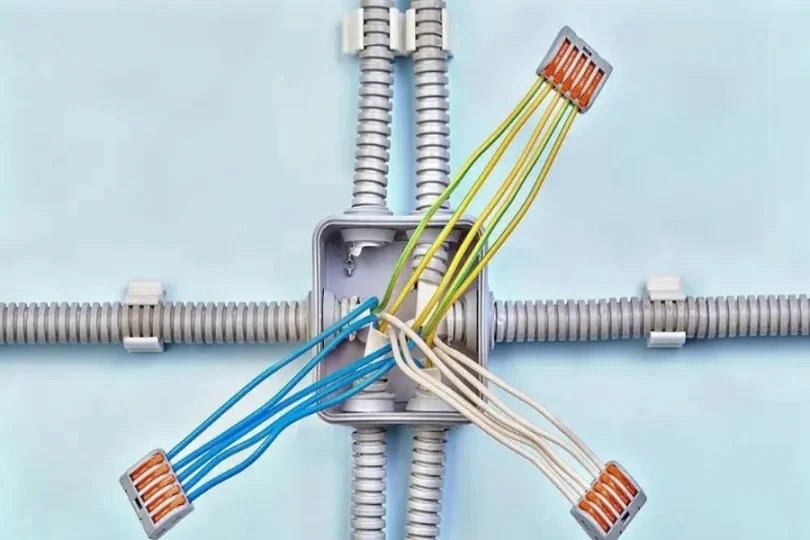

Electrical systems are woven into nearly every aspect of modern living, yet many homeowners rarely consider what lies behind their walls. Wire connections and junction boxes form the hidden network that distributes electricity safely throughout a home. When installed and maintained correctly, they prevent overheating, reduce fire hazards, and support consistent power delivery. When neglected or improperly altered, they can pose serious safety risks. We will explore how these components function, why code compliance matters, and what homeowners should monitor before making any electrical modifications, so they can make informed decisions that protect both property and occupants.
Key Technical and Safety Considerations for Residential Wire Connections
1. Understanding the Purpose of Junction Boxes
Junction boxes serve as containment enclosures where electrical conductors meet, branch, or transition. Their primary function is to protect wire splices from mechanical damage and to contain sparks or heat that may result from loose connections. Building codes require that all wire splices be housed inside an approved electrical box rather than left exposed within walls or ceilings. These boxes are typically made of metal or durable thermoplastic and are designed to prevent accidental contact with energized conductors. Reputable contractors such as JDV Electric emphasize proper enclosure selection and installation to ensure that every splice remains secure, accessible, and compliant with current electrical standards.
Properly secured covers further shield the connection points from dust, moisture, and physical interference. Without a junction box, any wiring alteration becomes vulnerable to arcing, which significantly increases fire risk. Homeowners should recognize that concealed or buried splices without accessible covers violate safety standards and may complicate future troubleshooting. Accessibility is essential because electrical systems require periodic inspection and occasional modification, and junction boxes provide a structured, compliant environment for these tasks.
Ensuring the longevity of your electrical system requires a meticulous approach to how connections are housed and secured. When a junction box becomes overly crowded or wires are stripped too far back, the risk of arcing or short-circuiting increases significantly. Should the complexity of a wiring project exceed your comfort level, it is wise to book an electrician visit before closing up any walls or ceilings. An expert eye can identify subtle mistakes in grounding or polarity that a casual observer might easily overlook. Adhering to these safety protocols protects the structural integrity of your property while preventing potential fire hazards from hidden errors.
2. The Importance of Secure and Correct Wire Splicing
Wire connections depend heavily on mechanical tightness and electrical continuity. When conductors are joined with approved connectors, such as wire nuts or push-in connectors rated for the specific wire gauge, they provide a stable path for current flow. Loose splices can cause resistance, leading to localized heat buildup. Over time, this heat can degrade insulation, increasing the potential for short circuits. Matching conductor materials is equally important; copper-to-aluminum connections, for example, require approved transition connectors to prevent oxidation and expansion differences.
Homeowners should also understand that overloading a junction box with too many conductors can crowd connections, increase stress on splices, and limit airflow. Electrical codes provide box-fill calculations to determine how many conductors a box can safely accommodate. Even seemingly minor DIY adjustments—such as adding a new light fixture—require attention to conductor length, grounding continuity, and connector integrity. Reliable splicing is not just about twisting wires together; it involves proper torque, approved devices, and code-aligned installation practices.
Beyond the clear dangers of exposed wiring, the structural integrity of your electrical system often depends on what is hidden behind the drywall. Ensuring that every junction box is properly secured and that wire nuts are tightened to specification is essential for preventing localized overheating. When homeowners are unsure about the state of their historical or modern installations, consulting with a qualified professional like an electrician lubbock can provide much-needed clarity on code compliance. These detailed inspections often reveal improper splices or overloaded circuits that could otherwise lead to costly repairs or safety hazards. Taking a proactive approach to these invisible connections safeguards your property and ensures long-term electrical reliability.
3. Grounding and Bonding Within Junction Boxes
Grounding plays a critical role in safeguarding occupants from electrical shock. Each junction box must maintain a continuous equipment grounding path that connects all metallic components and devices to the home’s grounding system. In metal boxes, bonding screws or grounding clips ensure that the enclosure itself is electrically connected to ground. If a fault occurs and a live conductor contacts the box, the grounding system provides a low-resistance path that trips the circuit breaker quickly.
Without proper bonding, the metal box could remain energized, posing a shock hazard. Plastic boxes, while nonconductive, still require grounding continuity for the conductors inside them. Homeowners should be aware that removing or neglecting the grounding conductor compromises this protective pathway. Ground wires should never be cut short or omitted during fixture replacement. Maintaining a reliable grounding network ensures that overcurrent devices operate as intended, preventing prolonged fault conditions that could damage wiring insulation or connected appliances.
4. Accessibility and Code Compliance Requirements
Electrical codes emphasize that junction boxes must remain accessible without requiring demolition of walls or ceilings. This requirement ensures that connections can be inspected, tested, and repaired when necessary. Cover plates must remain visible and unobstructed; concealing a box behind drywall or cabinetry creates both a violation and a hazard. Homeowners sometimes encounter older renovations where splices were hidden improperly, and such situations should be corrected promptly. Accessibility also simplifies circuit tracing during renovations or troubleshooting outages. Another compliance factor involves box support and mounting integrity.
Junction boxes should be firmly secured to structural members or rated mounting systems to prevent strain on conductors. When planning remodeling projects, homeowners should consider whether existing boxes are adequately sized and positioned for new loads. Consulting a licensed electrical contractor can clarify local requirements and ensure installations align with current regulations. Adherence to these standards promotes longevity, simplifies future upgrades, and supports property value during inspections or resale evaluations.
4. Load Management and Circuit Capacity Awareness
Wire connections and junction boxes must accommodate the electrical load assigned to a circuit. Overloaded circuits can overheat conductors and connection points, even when protective breakers remain functional. Each wire gauge corresponds to a specific ampacity rating, and exceeding this limit stresses both insulation and splices. Homeowners adding appliances, lighting, or receptacles should confirm that the circuit capacity supports the additional demand. Junction boxes that serve as distribution points for multiple branches require careful load calculations to prevent cumulative strain.
Electrical systems operate quietly in the background, yet their reliability depends on disciplined installation practices and ongoing awareness. Wire connections and junction boxes are foundational components that contain, organize, and protect the pathways delivering power throughout a home. By understanding enclosure requirements, secure splicing techniques, grounding continuity, accessibility standards, load capacity, and environmental considerations, homeowners can make informed decisions during renovations or repairs. Responsible maintenance and adherence to code-aligned practices help prevent overheating, arcing, and structural damage. When uncertainty arises, consulting a qualified contractor ensures modifications remain safe and compliant. A well-maintained wiring network supports comfort, efficiency, and long-term property integrity.