
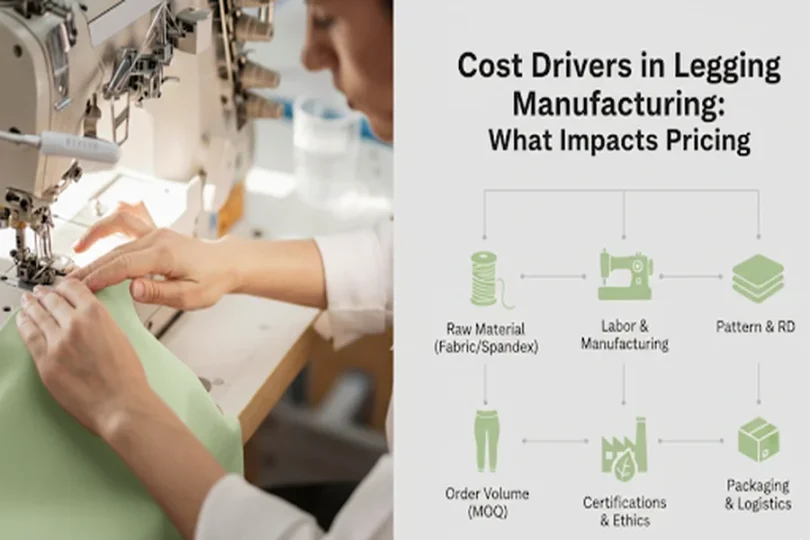

Understanding the factors behind legging pricing is essential for brands and manufacturers alike. From fabric selection, labor costs, and minimum order quantities to design complexity, every element plays a role in the final cost. But is opting for the cheapest manufacturing option always the best choice? This guide breaks down the key cost drivers in legging production to help you make informed decisions when working with a legging manufacturer.
From fabric selection, labor costs, and minimum order quantities to design complexity, every element plays a role in the final cost
Fabric, Labor, and MOQ Considerations
When it comes to producing leggings, a few factors such as fabric, labor, and minimum order quantities can make a big difference in cost and overall profitability.
Fabric – The Main Cost Driver
Fabric is often the single largest cost component in legging production, accounting for 60% to 70% of the total. The type of material and its features play a major role in pricing, as leggings require highly stretchable fabrics such as spandex, nylon, or polyester blends.
Imported fabrics or those with advanced functionalities, like moisture-wicking, UV protection, or anti-bacterial properties, tend to be more expensive than standard domestic options. Fabric weight, measured in GSM, directly affects how much material is needed, which impacts the overall unit cost. In addition, inefficient cutting layouts or lack of optimization for fabric width can lead to significant waste, further increasing costs.
Compared to a hoodie manufacturer, where fabric cost is often driven by weight, fleece thickness, or insulation, a legging manufacturer must prioritize high-stretch, lightweight performance fabrics.
Labor – Variable by Region and Complexity
Labor costs are influenced by local wage rates, production time per unit, and the number of items produced. Design complexity is a major factor: leggings with multiple panel cuts, hidden pockets, or specialized stitching techniques such as flatlock require more skilled labor and longer assembly time, which drives costs higher.
The production process itself also contributes significantly, with sewing and finishing often representing more than 60% of labor expenses. Utilizing semi-automated production lines can reduce overall production time for example, from 14-16 days down to 8-10 days, helping to optimize labor costs while maintaining quality. Effectively balancing design requirements with labor efficiency is key for cost management.
MOQ – The Economies of Scale Effect
Minimum order quantity (MOQ) has a direct impact on cost distribution and pricing flexibility. Larger orders allow fixed costs, such as machine setup, sample making, and management overhead, to be spread across more units, reducing the per-unit cost. High MOQs also give brands stronger negotiation power with suppliers, often leading to lower prices for fabric and manufacturing.
On the other hand, small orders can incur hidden costs, such as limited customization options for labeling or packaging, and may require using in-stock fabrics rather than custom-dyed materials. Understanding the effects of MOQ helps brands plan orders efficiently while balancing cost, customization, and production flexibility.
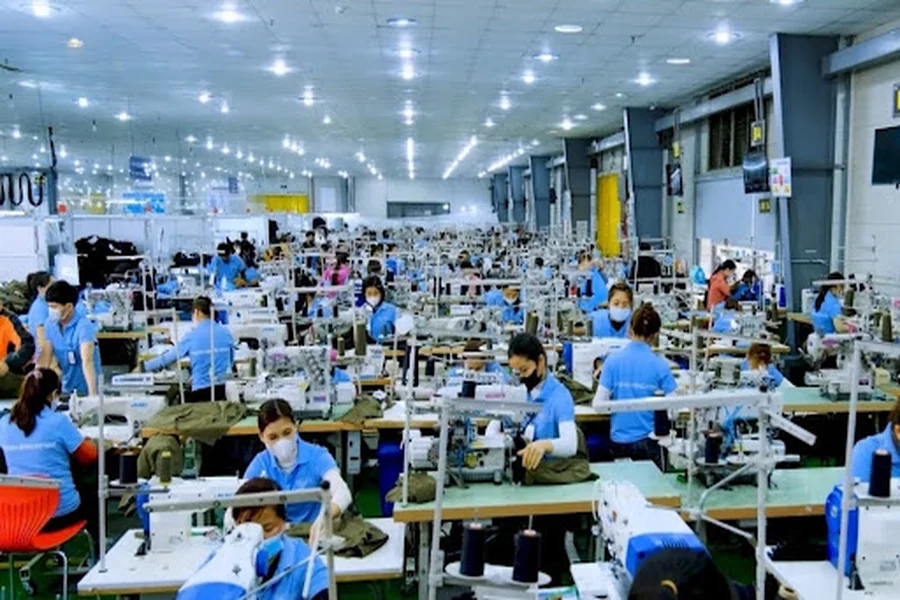
Larger orders allow fixed costs, such as machine setup, sample making, and management overhead, to be spread across more units, reducing the per-unit cost
How Design Complexity Affects Cost
The complexity of a legging design can significantly impact production costs. More intricate designs often require multiple rounds of sample development, which increases both time and expenses. Complex patterns also carry a higher risk of errors during production, and fixing mistakes can quickly add up, further raising the cost per unit.
For leggings, which are primarily performance-focused garments, overly complicated designs are usually not recommended. Keeping designs simple helps reduce development time, minimize production errors, and maintain cost efficiency, while still delivering high-quality, functional products that meet customer expectations.
Packaging and Logistic
Packaging & Logistics also play a meaningful role in legging manufacturing costs. Packaging choices such as recycled polybags, branded boxes, or individual packing add material and labor expenses.
Logistics costs vary depending on shipping distance, transportation mode (sea or air), Incoterms, and fluctuating freight rates. While sustainable packaging or faster delivery options can increase unit costs, they often enhance brand value and improve the overall customer experience.
Is Cheap Manufacturing Pricing The Best Option?
At first glance, a low manufacturing quote can seem very appealing, but cheap doesn’t always mean truly affordable. Hidden challenges like quality issues, production delays, inconsistent suppliers, and unexpected reworks can quietly add up, turning a seemingly good deal into extra cost and stress.
A better approach is to focus on a partner who offers transparency, consistent standards, and smooth production processes. Paying a little more upfront can actually save time, reduce headaches, and ensure your products meet expectations.
Considering the total cost of ownership (TCO) including hidden risks, reworks, and long-term reliability, helps brands see the real value beyond the initial quote, proving that the smartest choice is about overall value, not just the lowest number on paper.
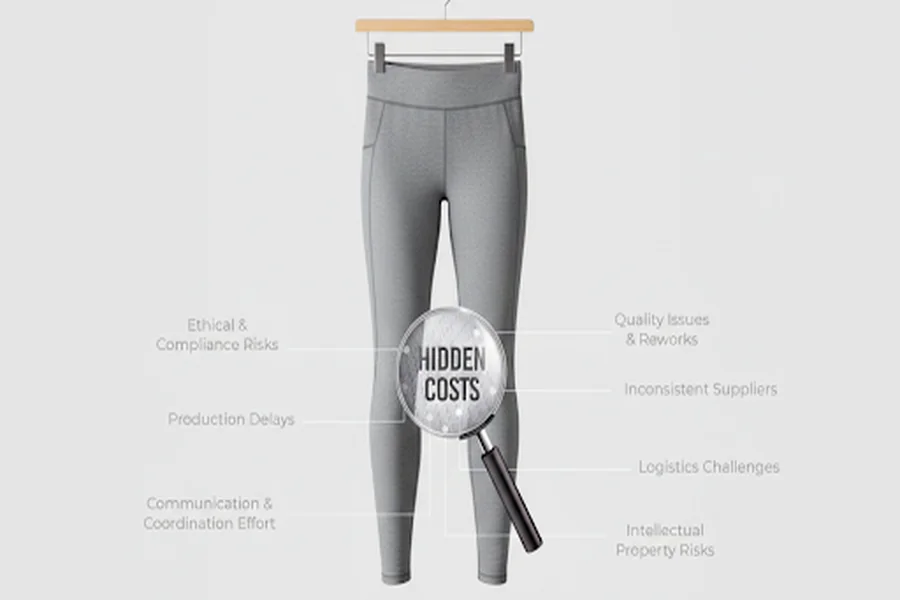
Considering the total cost of ownership (TCO) including hidden risks, reworks, and long-term reliability
In conclusion, while there are many factors involved in the cost of producing leggings, brands should pay the most attention to fabric choices, labor efficiency, order quantities, and design simplicity. Cheap quotes may look attractive at first, but they rarely tell the whole story, as hidden risks and extra work can quickly add up. Keeping designs simple, planning orders strategically, and prioritizing transparency and consistency are key to producing high-quality leggings without unnecessary surprises.