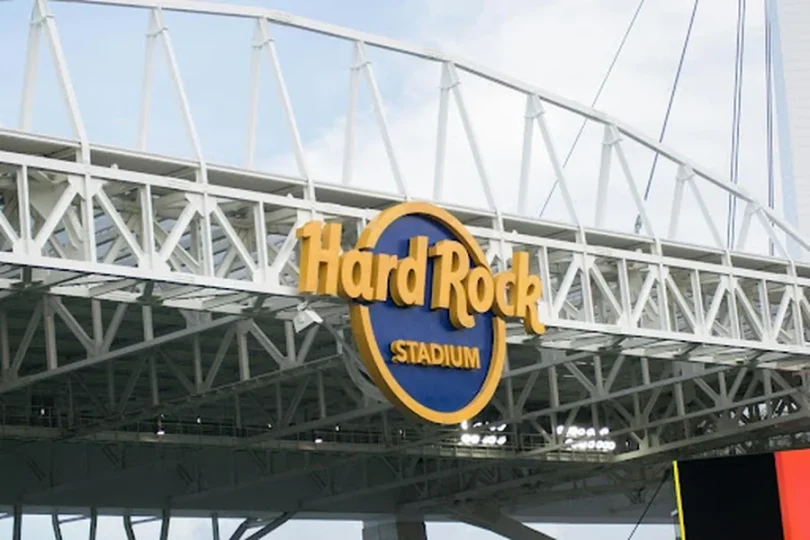

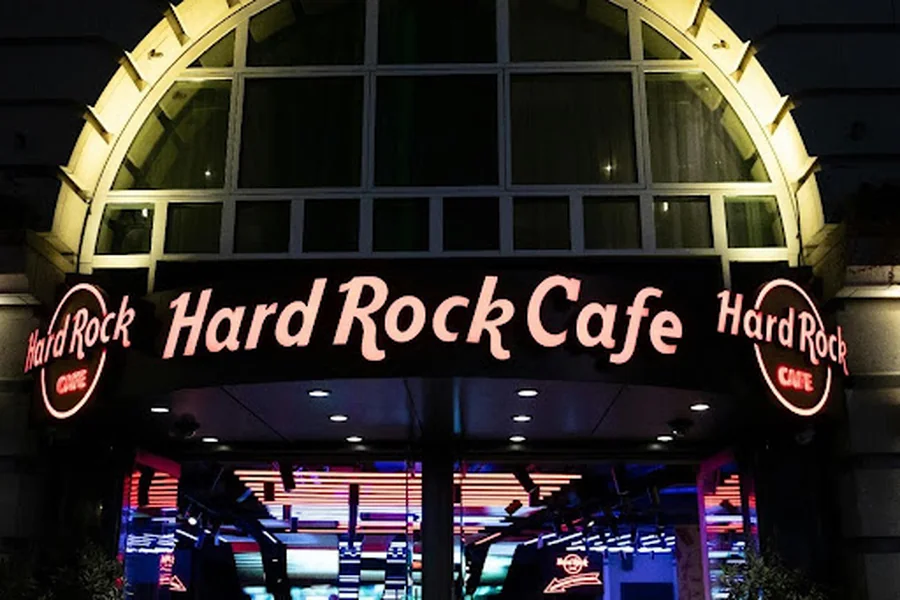
In the State of Florida, online sports betting happens only through the operations of the Hard Rock Bet brand, which is part of the Hard Rock Cafe company owned and controlled by the Seminole tribe.
Unlike many other states, where sports betting is legal through a licensing system operated by state authorities and which allows the licensees to compete on said market, Florida runs an exclusive deal with the Seminoles, which is currently poised to end in 2051.
However, this system wasn’t without its bumpy road toward an established position. Litigation, a forced shutdown, and a slew of exhausted legal avenues have been part of the Hard Rock-Florida partnership that brought online sports betting to the Sunshine State.
In this article, we will discuss how the IGRA made it possible for this system to work, how the hub-and-spoke method is the system itself, and then we’ll explore the legal journey that the model had to go through to end up establishing itself.
The Indian Gaming Regulatory Act is the basis
The basis for how Florida set up its compact deal is the Indian Gaming Regulatory Act, which was adopted in 1988. Its mechanism gives the Secretary of the Interior 45 days to decide whether to approve or disapprove a compact deal between a Native American tribe and the state for Class III gaming operations.
There’s also the principle of approval by inaction. Simply put, a compact deal is automatically considered approved after 45 days if the Secretary of the Interior does not approve or disapprove it. The condition is that the compact is consistent with the IGRA. This is an important note because the Seminole-Florida compact went ahead specifically because of inaction.
In fact, the compact between the Seminole Tribe and Florida dates back to 2010. On 7 April of 2010, the state and the tribe signed the compact, which took effect on 6 July 2010. Notably, the initial compact did not include sports betting as part of its agreement, instead only working for the casino establishment more broadly associated with the IGRA.
The hub-and-spoke method
The hub-and-spoke method in the context of the Seminole-Florida compact refers to the fact that tribal territory is the hub where the servers that host online betting are located. In this situation, placed bets track back to the servers’ location, and their geographical positioning within tribal territory meets the terms of the compact.
Naturally, the idea was far from universally accepted. Pari-mutuel operators who wanted to enter the Florida market, and who took action via a lawsuit, called it a ‘transparent artifice’ to bypass State Amendment 3, adopted in 2018.
This amendment specifically banned new casinos unless authorized by voters, with the exception being those opened on Seminole land. Given that it passed with 71% of the popular vote, it was a supported measure,
So, given that the opening of the Hard Rock Bet online gambling platform circumvented the amendment through the technicality of the hub-and-spoke method, it sparked controversy that escalated into litigation. It is a novel approach, as BetBrain’s betting and casino guides have not identified a similar system in many open markets around the world.
Tracking the Florida betting situation
When assessing the viability of this compact in a 2021 presentation, the lawyers of Governor Morgan DeSantis invoked Amendment 3 as the reason why sports betting would be unconstitutional in Florida outside Seminole tribal land. The reaction came from the office of the Attorney General, which highlighted how sports betting is not part of the amendment’s definition of casino gambling.
Regardless, the Hard Rock Bet sportsbook is the only legal one in Florida as of November 2026. It accepts bettors aged 21+ who are physically in Florida. It also cedes money to the state, with an agreed-upon minimum of $400 million annually for the first five years of the agreement, which totals $2.5 billion.
The major caveat comes from prediction markets, which we’ll address a bit later. Given that they’re under the control of the CFTC (Commodity Futures Trading Commission), not the compact that regulates sports betting, there has been no state-government initiative to block them.
A 2021 Compact set things off
The compact that we’ve been discussing so far was, in fact, signed on 23 April 2021, with a 30-year duration for this deal. Both Seminole Chairman Osceola and Governor DeSantis signed it, but without any pomp, given that the press wasn’t at the signing.
The House ratified the compact on 19 May 2021 during the last day of a special session, a day after the Senate did so, while the Tribal Council of the Seminoles approved the compact on 17 June 2021.
Next was the federal approval of the Bureau of Indian Affairs, which declined to do so, allowing it to pass through the ‘approval by inaction’ principle stated previously after the 45-day window passed. Consequently, it ended up published in the Federal Register on 11 August 2021.
Another interesting thing to note, separate from the sports betting side of things: Seminole casinos received the authorization to offer craps and roulette. The compact also approved the construction of three new casinos on tribal land.
Litigation shuts the arrangement down
Hard Rock Sportsbook launched on 1 November 2021. This initial iteration was to last no more than a month, as federal judge Dabney Friedrich ruled the compact invalid only three weeks later, leading to the bookmaker’s closure on 4 December of that year.
Friedrich’s reasoning was quite simple: a refusal to accept the idea that bets were, indeed, placed on tribal land because the servers were on that territory. He ordered that the state return to the 2010 version of the compact with the Seminoles, who stopped revenue-sharing payments in February 2022.
Reversal on appeal, relaunch, and the Supreme Court certiorari denial
This shutdown lasted more than a year and a half. Things changed when, on 30 June 2023, the D.C. Circuit Court of Appeals reversed Friedrich’s ruling, but it expressly omitted giving any opinion on whether the ratifying status of the compact is constitutional under Amendment 3.
Afterward, Chief Justice Robert decided to (temporarily) stay the D.C. Circuit’s ruling on 12 October 2023, but the full Court denied the stay on 25 October.
An interesting development came when Justice Kavanaugh’s statement mulled over whether a separate state law authorizing only the Seminole Tribe’s right to conduct off-reservation gambling would raise equal protection issues. However, Solicitor General Prelogar denied that race-based equal protection concerns apply in this case.
Hard Rock Bet launched on 7 November 2023, nearly two years after its initial launch, with statewide betting becoming active on 7 December of that year. From January 2024 on, the revenue-sharing payment resumed as well.
The final step that cemented Hard Rock Bet’s continuation and the legality of the compact was the U.S. Supreme Court’s decision to deny certiorari. What it means is that the Supreme Court declined to hear the case.
This decision meant that the appeal court’s ruling, which reversed Friedrich’s initial decision, allowed the site to operate legally under the 2021 version of the compact.
The Seminole Tribe moves against DraftKings and prediction markets
In January 2026, Florida’s Attorney General, Jason Uthmeier, asked policymakers to look into whether prediction markets interfere with the 2021 compact. This was the first sign that there was a conflict brewing, specifically in the state of Florida.
Ultimately, on 8 October 2026, the Seminole Tribe filed a 72-page complaint in the Broward County Circuit Court, which it aimed directly at DraftKings CEO Jason Robins (who also owns a controlling stake in the company as the 100% owner of Series B shares) and GUS III LLC, which is the firm that runs DraftKings Predictions (the brand’s prediction market solution).
Not only did the complaint include five civil claims, but it also included a Florida-applicable racketeering claim aimed at Robins personally. The Seminoles allege that Robins directed the launch of the Pick6 platform and the super app called DraftKings Sports & Casino.
DraftKings’ position was to say that its prediction market product was legal under the Commodity Exchange Act. As for the Pick6 service, it describes it as a peer-to-peer fantasy product. Naturally, the Seminoles disagree, alleging that Pick6 is effectively player proposition betting.
Given that we’re writing this in early November 2026, this lawsuit is too recent to provide a resolution on what happened. What we can say is that all products involved are still running, but the impetus of this legal action makes it a storyline worth monitoring.
Conclusion
For now, we can say that the Seminole-Florida compact remains in place as the sole traditional sports betting operation in the state despite legal challenges. The Supreme Court’s certiorari decline settled as much.
However, it’s important to note that possible changes in Florida’s political structure may change this, especially via new amending initiatives. As for the prediction market situation, this is a national, overarching matter that warrants monitoring.
If you bet on sports or gamble in any way, please do so only if you’re 21+ or the minimum age in your jurisdiction, and contact 1-800-MY-RESET if you’re in need of specialized assistance.