
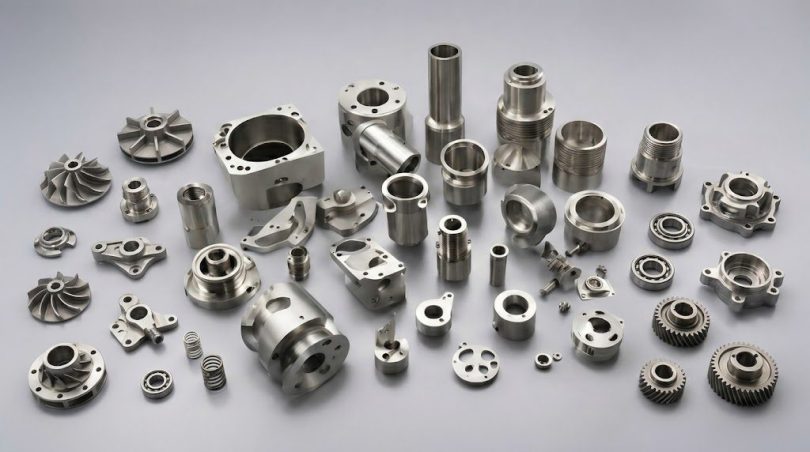

Surface finishing is a crucial step in the production of custom-made parts and components, as it can impact their appearance, functionality, and ability to withstand harsh environments. In addition to choosing the appropriate material and manufacturing process, engineers need to take into account the texture, corrosion resistance, wear protection, and dimensional requirements. Choosing from over 50 surface finishes, 3ERP can help close the gap between function and finish. Knowing these options will help you make appropriate decisions that will meet the manufacturing needs and the product performance, appearance, and production objectives.
Understanding Why Surface Finishing Matters
A geometric shape rarely makes it to the intended application without some modifications. The surface state can affect the friction, adhesion, electrical conductivity, corrosion resistance, and appearance. Exposed material, sharp edges, and machining marks may also need to be addressed prior to assembly or use.
Surface finishing deals with these considerations by mechanical, chemical, or electrochemical treatments. Some processes are used to remove material and produce a smoother texture; others are used to apply protective coatings or modify the surface properties. The selection of the finish early in the design process will help set realistic expectations for manufacturing and prevent costly changes later in the process.
Exploring the Main Categories of Surface Finishes
Surface finishes are different depending on the materials, manufacturing techniques, and use. When selecting a treatment, it is important to know what each type offers the finished piece, rather than selecting a treatment just for appearance.
Mechanical treatments, such as polishing and bead blasting, modify surface texture. Chemical treatments may be used to enhance corrosion resistance or to prepare surfaces for further coatings. Electrochemical processes such as anodizing and electroplating produce controlled surface layers or alter the surface material.
There are additional options provided by paints, powder coatings, and special protective treatments for color, insulation, and environmental protection. Technical compatibility is important in some applications, where these categories overlap. It is important to evaluate material-specific results, as the finish that fits an aluminum enclosure may not perform the same on steel or plastic.
Matching Surface Finishes to Manufacturing Requirements
When choosing a finish, consider the functional requirements, appearance, complexity, and costs of the finish. A precision sliding component may require controlled roughness and dimensional accuracy, while a component that is exposed to moisture may require corrosion protection. Different priorities are added by decorative parts, such as colour consistency, reflectivity, and texture.
This decision is especially critical in the area of on-demand manufacturing, where prototypes and production components may have to conform to specified requirements without any unnecessary processing. Engineers at 3ERP can look into part designs and manufacturing needs in order to help identify appropriate processes. Clear drawings, material specifications, critical dimensions, and intended operating conditions make finish selection easier.
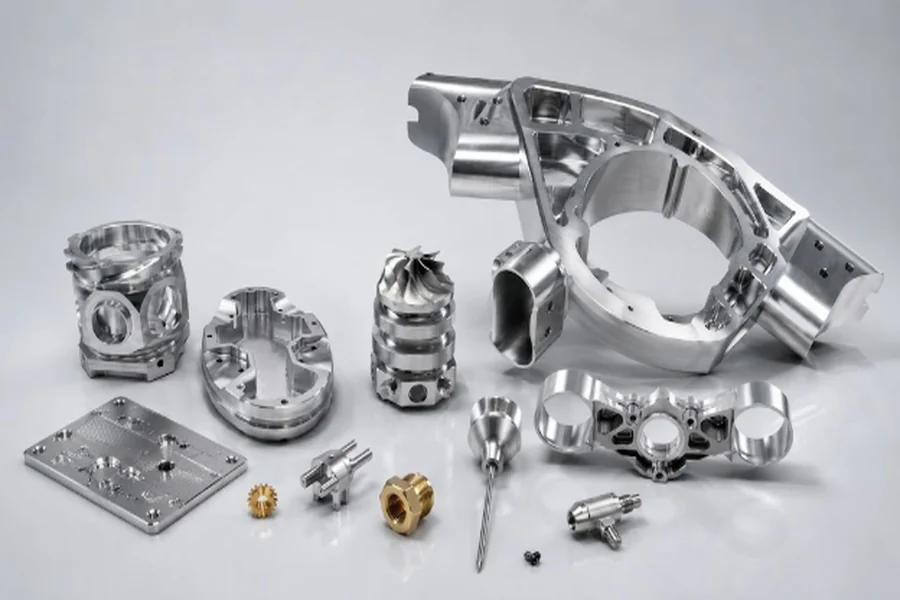
Common Surface Finishing Options for Custom Parts
There are over 50 different finishing options, offering flexibility in metal and plastic parts, but each is used for a different purpose. Here are some examples of popular processes and some of the practical considerations.
- As-machined finish: Retains the characteristic tool marks from CNC machining and can suit functional components where additional cosmetic treatment is unnecessary.
- Bead blasting: Produces a more uniform matte texture by projecting abrasive media against the surface.
- Polishing: Reduces visible surface irregularities to create a smoother, brighter appearance.
- Anodizing: Creates a protective oxide layer on suitable metals, particularly aluminum, and may offer decorative color options.
- Powder coating: Applies a durable polymer-based coating that provides color and additional surface protection.
- Electroplating: Deposits a metal layer to support properties such as corrosion resistance, appearance, or electrical performance.
- Passivation: Treats suitable stainless steel surfaces to improve corrosion resistance by supporting the formation of a protective passive layer.
- Brushing: Creates directional lines that produce a distinctive satin or grain-like appearance.
- Painting: Adds color and, depending on the coating system, protection against environmental exposure.
- Chemical conversion coating: Creates a surface layer on compatible metals for corrosion protection or improved paint adhesion.
These are just some of the finishing landscape options available. The choice of the correct option is based on the compatibility of materials, the desired surface properties, the standards to which the components must conform, and the intended use.
Surface Finishing Across Different Manufacturing Processes
Different production methods may have very different finishing requirements. Anodizing of the CNC-machined aluminum or passivation, plating, or protective coatings of the machined steel parts may be advisable. Powder coating or painting is used to coat sheet metal enclosures to ensure uniform coverage on formed surfaces.
When appearance is required, compatible secondary processes can be performed on injection molded plastics to retain the mold-defined texture or to impart other textures. Depending on the resin used and the intended use of the parts, vacuum-cast polyurethane parts may require finishing. In addition, 3D-printed metal or plastic parts may need post-processing to minimize the presence of layer lines or to enhance surface quality.
Finish selection should be based on geometry, accessibility, material behavior, and anticipated dimensional changes, as each process will result in different starting conditions.
Balancing Appearance, Protection, and Dimensional Accuracy
A pleasing appearance does not necessarily mean optimal performance. Polishing can make it smooth, but may remove material. Anodizing and plating can cause changes in dimensions, and thick anodizing or plating can impact fits, threads, and mating surfaces. Therefore, it may be necessary to mask critical features.
The decision is also affected by environmental exposure. The durability of coatings can vary depending on the humidity, chemicals, abrasion, ultraviolet radiation, and temperature. Engineers should consider actual operating conditions and not just appearance.
If precision tolerances are necessary for components, finishing allowances should be taken into account during design. These requirements should be communicated prior to production to co-ordinate the machining, coating thickness, inspection and final assembly.
Integrating Surface Finishing into the Manufacturing Workflow
Surface treatment is best achieved as part of the production plan and not as an afterthought. There is a clear workflow that links the design requirements to the manufacturing process and the finishing process to the inspection requirements. This coordination can minimize unnecessary rework and ensure consistency between batches.
The process typically starts with a CAD file and some technical requirements, after which there is a quotation and DFM review. Once the order is confirmed, the parts are made, completed as per agreed specifications, checked, and ready for delivery. This entire process is facilitated by 3ERP’s CNC machining, injection molding, sheet metal fabrication, 3D printing, and other manufacturing services. It has an ISO 9001:2015-certified quality system to help with documented quality practices and inspection during production.
Conclusion
Surface finishing is the link between manufacturing accuracy and the functional requirements of a finished part. Whether it’s matte textures, polished surfaces, protective coatings, or electrochemical treatments, every choice has its own set of advantages and disadvantages. The selection will vary based on the material, conditions of use, visual appeal, tolerances, and cost of production.
The greater the number of finishing options explored, the easier it will be to match these considerations prior to manufacturing. If the engineers know the specification from the beginning and test the finishes with the production techniques, they can create custom-made components to achieve the desired function and appearance. The wide range of materials, manufacturing, and finishing capabilities makes 3ERP a practical foundation to transition designs from prototype to production.