
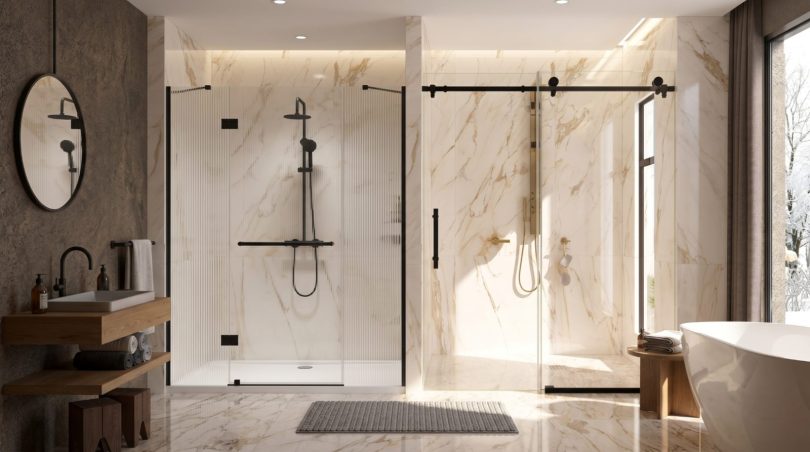

A shower enclosure affects more than the appearance of a bathroom. It influences how well water is contained, how much natural light moves through the space, how easy the shower is to maintain, and how the room feels day after day. Unlike a traditional shower curtain, a glass enclosure creates a permanent visual and physical boundary around the shower without completely blocking the rest of the bathroom.
For homeowners comparing shower curtains, framed doors, semi-frameless systems, and frameless designs, understanding the practical differences matters more than simply choosing the most fashionable option. When evaluating these options, you might ask: What are the benefits of glass shower enclosures? While glass can offer several functional advantages, those benefits depend on the enclosure design, glass type, hardware, measurements, installation, and how the bathroom is used.
1. Glass Creates a More Open Bathroom
One of the most noticeable advantages of shower glass is visual openness. A clear glass panel does not create the same solid visual barrier as a curtain or opaque partition. Instead, the shower area remains visible, allowing the tile, flooring, fixtures, and overall bathroom layout to read as one continuous space.
This can be particularly useful in smaller bathrooms. A compact shower enclosed by a dark curtain can make the room feel divided into separate sections. Transparent glass preserves sightlines and allows both natural and artificial light to travel through the space.
The effect does not physically increase the bathroom's square footage. Rather, it changes how the existing space is perceived. Frameless designs can emphasize this effect because they use minimal visible metal around the glass. The Glass Association of North America notes that frameless shower enclosures can use clear, translucent, or opaque tempered glass and require careful consideration of dimensions, hardware, support, and installation.
2. Natural Light Can Travel More Freely
Lighting is another practical consideration. A shower curtain or solid partition can block some light from reaching the shower floor and surrounding areas. Transparent glass allows light to pass through with fewer visual interruptions.
In a bathroom with a window near the shower, this can help distribute daylight throughout the room. It can also make the shower area easier to see without relying entirely on overhead lighting.
The difference is especially noticeable when the enclosure uses clear glass rather than heavily textured or opaque glass. Frosted, patterned, or privacy glass can still provide useful light transmission, but the visual effect will be different.
It is worth separating this benefit from claims about energy savings. More daylight may reduce the need for artificial lighting at certain times, but the actual effect depends on window placement, bathroom orientation, lighting habits, and climate. It should not be treated as a guaranteed reduction in household energy use.
3. Glass Is Easier to Keep Visually Clean Than Many Curtains
A major practical reason homeowners choose glass is maintenance. A shower curtain is flexible and porous compared with glass, while the smooth surface of shower glass can generally be wiped or squeegeed after use.
The glass itself does not provide a food source for mold or mildew. However, that does not mean a glass enclosure is maintenance-free. Water spots, soap residue, mineral deposits, and buildup around seals or hardware can still occur.
Daily habits make a substantial difference. A quick squeegee after showering removes much of the water before it dries. Regular cleaning with a suitable glass-safe product helps prevent deposits from becoming difficult to remove.
The enclosure's design also matters. A system with fewer exposed channels and recesses may be simpler to clean than one with extensive metal framing. Current bathroom design guidance similarly identifies easier cleaning as one reason frameless systems appeal to homeowners, while noting that glass still requires routine care.
4. It Provides Better Water Containment Than an Uncontrolled Curtain
The fundamental purpose of a shower enclosure is water management. A properly designed enclosure directs most shower spray back toward the wet area rather than allowing it to spread across the bathroom.
This is particularly important around vanities, toilets, cabinetry, and bathroom flooring that should not receive continuous water exposure.
However, glass should not be described as automatically waterproof. Water containment depends on the shower's configuration, door swing, panel placement, seals, threshold, showerhead location, slope, and installation quality.
For example, a frameless walk-in shower may intentionally have an open entry rather than a fully enclosed door. In that situation, the design must account for the direction and volume of spray. A fixed glass panel positioned correctly can control water effectively, but it cannot stop every drop from leaving an intentionally open shower entrance.
5. Tempered Glass Provides a Safety-Oriented Material Choice
Residential shower enclosures commonly use safety glazing. In the United States, shower enclosure glass must meet applicable safety-glazing requirements. The Glass Association of North America's design guide references the federal CPSC 16 CFR 1201 impact requirements for shower enclosure glazing.
Tempered glass is heat-treated so that, when it breaks, it generally breaks into many smaller pieces rather than large sharp shards associated with ordinary annealed glass. That makes it a standard choice for many shower applications.
Safety does not mean the glass is unbreakable. Tempered glass can still break from severe impact, edge damage, improper handling, manufacturing defects, or other causes. This is why correct glass specification, fabrication, hardware selection, and installation are important.
The safety characteristics of the glass should therefore be considered together with the entire enclosure system rather than viewed as a reason to ignore installation quality.
6. Frameless Designs Reduce Visual Clutter
Not every glass shower needs to be frameless, but frameless construction has become closely associated with contemporary bathroom design.
A framed enclosure uses metal framing around the glass to provide structural support. A frameless enclosure instead relies on appropriately specified glass, hinges, brackets, clamps, and other hardware.
The result is a cleaner visual field. Instead of multiple metal profiles interrupting the shower's appearance, the glass becomes the dominant element.
This can be particularly effective when the bathroom contains detailed tilework, decorative stone, a niche, or other architectural features that homeowners want to keep visible.
There is a tradeoff. Frameless systems generally require thicker glass and more precise planning. The Glass Association of North America's design guide identifies 3/8-inch (10 mm) tempered glass as the minimum thickness within the scope of its frameless enclosure guidance.
7. Different Door Styles Can Solve Different Space Problems
Another benefit of glass enclosures is design flexibility. The enclosure does not have to follow one standard configuration.
A hinged or pivot shower door can provide a wide opening where there is enough clearance outside the shower. A sliding door can be useful where an outward-swinging door would interfere with a vanity, toilet, or other fixture.
Fixed glass panels can create an open walk-in shower, while corner configurations can make use of otherwise underutilized bathroom space.
The choice should be based on the physical layout rather than appearance alone. Door clearance, plumbing locations, wall construction, showerhead position, and user access all affect which configuration makes sense.
For compact bathrooms, sliding systems are often considered because the door does not need the same outward swing area as a hinged design. Larger bathrooms may provide more flexibility for pivot or hinged doors.
8. Glass Makes Bathroom Features Easier to See
A shower enclosure can also act as a design-neutral element. Clear glass allows tile patterns, natural stone, accent walls, niches, benches, and decorative fixtures to remain visible.
This is one reason glass works across many bathroom styles. It can complement modern minimalist spaces without overwhelming them, while also fitting traditional bathrooms where the goal is to highlight tile or architectural details.
Low-iron glass can be another consideration when color clarity is particularly important. Standard clear glass can have a subtle green tint, especially when viewed through thicker edges. Low-iron glass reduces that coloration and can provide a clearer appearance, although it is a different specification rather than an automatic improvement for every bathroom.
9. Glass Enclosures Can Be Customized to Unusual Layouts
Bathrooms rarely have perfectly uniform dimensions. Walls can be out of square, ceilings can slope, benches can project into the shower, and half-walls can create unusual openings.
Glass shower systems can be fabricated around many of these conditions rather than forcing the bathroom into the dimensions of a standard curtain.
That flexibility is useful during renovations where the existing layout cannot easily be changed. It can also help designers create corner showers, three-sided enclosures, neo-angle configurations, and walk-in arrangements.
But customization makes accurate measurement more important. Glass cannot simply be trimmed on-site in the same way a fabric curtain can be adjusted. Measurements, hinge locations, wall conditions, clearances, and hardware requirements need to be established before fabrication.
10. They Can Give a Bathroom a More Finished Appearance
There is also an aesthetic benefit that is difficult to quantify. A permanent glass enclosure can make the shower feel like an intentional part of the bathroom's architecture rather than a temporary area separated by a curtain.
This is one reason glass appears frequently in contemporary bathroom renovations. The combination of transparent surfaces, minimal framing, modern hardware, and continuous tile can create a cohesive appearance.
Some homeowners also consider bathroom upgrades when thinking about future resale. Bathroom improvements can influence how buyers perceive a property, but there is no universal dollar-for-dollar return associated with installing a glass shower enclosure. The effect depends on the home's market, the quality of the renovation, the surrounding finishes, and buyer preferences.
Glass Shower Enclosures vs. Shower Curtains
The comparison between glass and curtains ultimately comes down to priorities. A curtain is inexpensive, flexible, easy to replace, and forgiving when bathroom dimensions change. It can also provide privacy without requiring specialty glass.
Glass offers a more permanent solution, better visibility, a smoother surface for cleaning, and greater design integration. It also requires more planning and typically involves higher material and installation costs.
Neither option is universally correct. A rental bathroom, temporary renovation, or highly budget-conscious project may favor a curtain. A permanent bathroom remodel may place greater importance on durability, appearance, water management, and long-term maintenance.
What Should You Consider Before Choosing Glass?
Before selecting an enclosure, look beyond the glass itself. Start with the bathroom layout and determine how much space is available for the door to operate. Then consider the shower's water-spray pattern, wall construction, threshold, drainage, and desired level of privacy.
Glass type and thickness should be selected according to the enclosure design and applicable safety requirements rather than simply choosing the thickest option available.
Hardware is equally important. Hinges and brackets must be compatible with the glass and properly supported by the surrounding structure. Installation tolerances also matter because small measurement errors can affect door alignment and operation.
Finally, think realistically about maintenance. Clear glass looks excellent when it is maintained, but it also makes water spots and mineral deposits visible. If the bathroom has particularly hard water, regular squeegeeing and cleaning may become part of the normal routine.
Conclusion
The advantages go beyond appearance. Glass can preserve sightlines, allow more light through the bathroom, simplify routine surface cleaning, improve water containment, provide a durable safety-glazing solution, and accommodate a wide range of shower layouts.
The strongest benefit depends on the bathroom. In a small space, visual openness may matter most. In a busy household, easy surface maintenance may be more important. In a detailed bathroom renovation, clear glass may allow the tile and fixtures to remain the focal point.
Ultimately, the quality of the result depends less on the word “glass” and more on the complete system: appropriate safety glazing, thoughtful layout, compatible hardware, accurate measurements, effective water management, and proper installation. Those factors determine whether the enclosure performs as well as it looks.
Cosy, welcoming spaces are not limited to the home. A quick coffee and a warm bakery treat can be the perfect break between furniture shopping and paint sampling, and Greggs Menu Price gives UK readers a handy overview of typical prices before they head out.