
Stockton Springs sits on a wooded peninsula where the Penobscot River widens into the sea. It is a small Waldo County town of about 1,500 residents, easy to miss on the drive up Route 1, and often more rewarding for exactly that reason.
Where the river becomes the bay
The town’s geography is its story. Sandy Point looks south into Penobscot Bay, while Cape Jellison juts into the estuary like a green thumbprint.
Colonial mapmakers called this stretch of coast a natural harbor, and shipbuilders agreed. Yards along the shore once launched schooners bound for Boston and the Caribbean.
Today the working waterfront has largely gone quiet, replaced by lobster boats, kayakers, and the occasional sailing yacht anchored off Fort Point.
A walk through Fort Point State Park
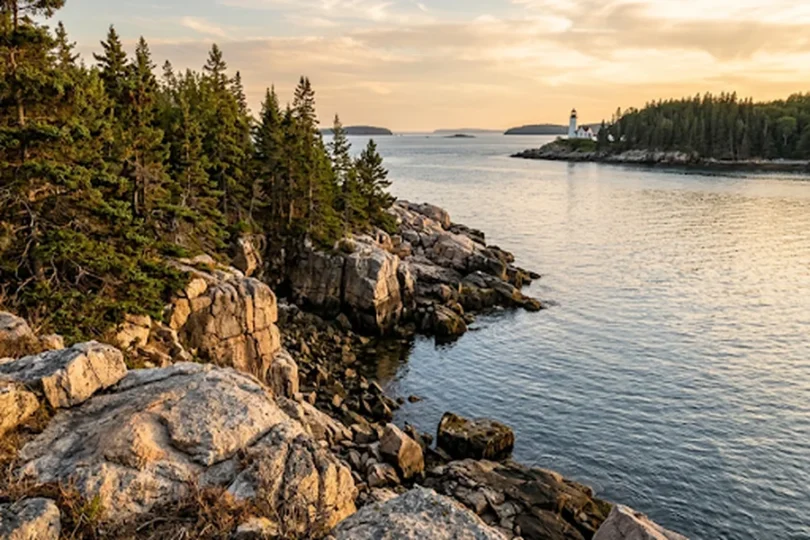
The most notable single stop in town is Fort Point State Park, a 154-acre preserve at the tip of Cape Jellison. Trails wind through spruce and birch to a pebble beach with views across to Castine.
The Fort Point Light, built in 1857, still marks the entrance to the Penobscot River. A short pier extends into the bay, popular with anglers casting for striped bass in July.
Travelers looking for quiet coastal retreats along Penobscot Bay often use the park as an anchor for a slower itinerary, pairing a morning walk here with an afternoon in Belfast or Castine.
Local flavor along Route 1
Stockton Springs is not a food destination in the celebrity-chef sense, and that is part of the appeal. A handful of family-run spots handle the seasonal traffic without fuss.
Just Barb’s, on Main Street, is a diner-style favorite for haddock chowder and blueberry pie. In summer, roadside stands sell native corn, wild blueberries, and honey from small apiaries in the surrounding woods.
For a proper lobster roll, most locals drive ten minutes north to Searsport or south to Belfast, where boats deliver the day’s catch to the pier by mid-afternoon.
Day trips within thirty miles
The town’s location makes it a practical base for exploring the central Maine coast. Belfast, a former shipping port turned arts-friendly small city, is fifteen minutes south and hosts a summer farmers market on the harbor.
Searsport, the next town north, is known for the Penobscot Marine Museum, a cluster of nineteenth-century buildings that trace the region’s shipping history. Castine, reached by a scenic drive around the bay, offers Georgian architecture and a working boatyard.
Farther afield, Acadia National Park is about ninety minutes east, close enough for a long day trip if traffic on the Trenton bridge cooperates.
When to visit
Summer is the popular window, with warm days in the seventies and long evenings that stretch past nine o’clock. July and August fill the state parks and roadside seafood shacks.
Early autumn, from mid-September through mid-October, is a favorite for repeat visitors. Foliage along the Penobscot arrives a week or two before the interior, water temperatures remain swimmable into September, and lodging pressure eases considerably.
Winter is quiet and cold, with occasional storms rolling in off the bay. It suits travelers who want empty beaches, a wood stove, and the long, still nights that inland Maine is known for.
Practical notes for the road
Cell service is reliable along Route 1 and thins on the back roads of Cape Jellison. A paper map or downloaded offline map is a small courtesy to yourself.
Bring layers, even in July. Sea breezes off Penobscot Bay can drop the felt temperature by ten degrees in an afternoon, and the local uniform is a fleece over a t-shirt from May through September.
Conclusion
Stockton Springs rewards travelers who arrive without a rigid plan. Its pleasures are unhurried: a walk to a lighthouse, a slice of pie at a diner, a long look across the bay as the light shifts toward evening.