
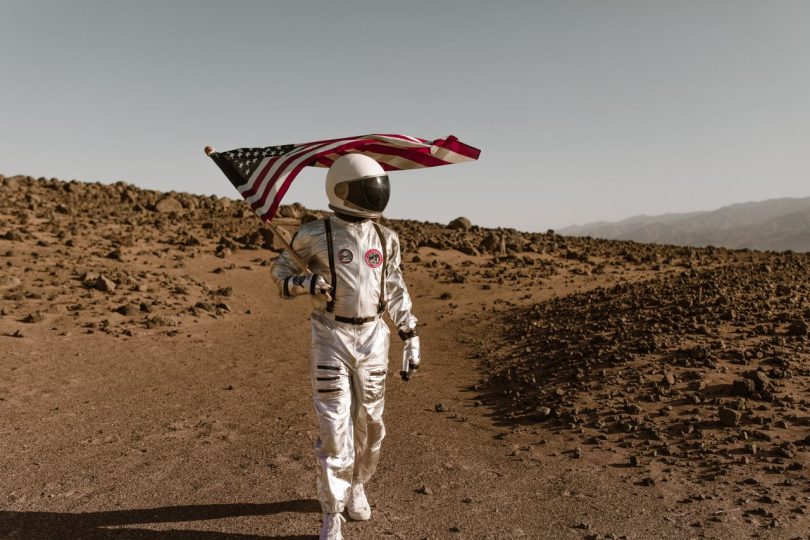

For decades, traveling into space was something only astronauts could experience. Now, private companies are working to make space tourism a commercial industry, raising questions about whether vacations beyond Earth could eventually become a realistic option for more travelers.
Space Travel Is Becoming a Business
The idea of paying for a trip into space is no longer limited to science fiction. Companies such as SpaceX, Blue Origin, and Virgin Galactic have demonstrated that private individuals can travel beyond Earth's atmosphere without being professional astronauts.
These developments have also attracted attention from investors. Interest in topics such as spacex stock price prediction reflects growing curiosity about the commercial potential of space technology, although SpaceX remains privately held and does not have a publicly traded stock price.
Unlike traditional tourism companies, space travel operators must develop advanced spacecraft, launch systems, and safety procedures. Their expenses are enormous, but the potential market could expand considerably if technology improves and operating costs decline.
For now, space tourism remains an exclusive experience. However, the early development of commercial aviation offers an interesting comparison. Flying was once expensive and accessible to relatively few people before technological improvements and competition helped make air travel more affordable.
Whether space tourism can follow a similar path remains uncertain.
What Would a Space Vacation Actually Look Like?
Not every space tourism experience involves spending several days orbiting Earth.
Some companies have focused on suborbital flights, which briefly take passengers to the edge of space before returning them to the ground. During these journeys, travelers may experience a few minutes of weightlessness and see Earth's curvature against the darkness of space.
Orbital tourism offers something different. These missions involve traveling fast enough to circle Earth, potentially allowing passengers to spend several days aboard a spacecraft.
Looking further ahead, companies are exploring commercial space stations that could accommodate private visitors. Such facilities might eventually offer sleeping quarters, observation areas, and opportunities to participate in scientific activities.
The experience would hardly resemble a conventional hotel stay. Everyday activities such as eating, sleeping, and moving around become considerably more complicated without gravity.
Nevertheless, that unusual environment could become one of space tourism's biggest attractions.
Why Are Travelers Interested in Space?
People have always been willing to travel considerable distances for experiences they cannot find at home.
Some climb Mount Everest, explore Antarctica, or visit remote islands. Space tourism appeals to a similar desire for adventure, although it takes that ambition much further.
For certain travelers, the opportunity to see Earth from space may be more appealing than the physical sensation of weightlessness.
Astronauts have frequently described how viewing the planet from above changes their perspective. Seeing continents, oceans, and the thin atmosphere surrounding Earth can create a powerful emotional experience.
There is also the appeal of being among the first people to participate in a new form of tourism.
However, curiosity alone will not create a sustainable industry. Space tourism companies must eventually attract customers beyond wealthy adventurers and celebrities.
The Biggest Obstacle Is Affordability
The price of space travel remains far beyond the budget of most vacationers.
Commercial spaceflight requires specialized vehicles, highly trained personnel, extensive preparation, and expensive launch infrastructure. Even short journeys involve costs that ordinary airlines do not face.
Reusable rockets could help reduce some expenses. Rather than manufacturing an entirely new launch vehicle for every mission, companies can potentially reuse major components across multiple flights.
However, lower launch costs would not automatically translate into affordable passenger tickets.
Operators must also consider maintenance, insurance, training, and the limited number of people each spacecraft can accommodate.
It may take decades before space tourism becomes accessible to middle-income travelers, assuming the industry develops enough to support that possibility.
Could Space Tourism Become Mainstream?
Space tourism has the potential to develop into a recognizable part of the travel industry, but widespread adoption is unlikely to happen quickly.
Its initial market will probably remain concentrated among wealthy individuals seeking extraordinary experiences. Over time, technological improvements, competition, and more frequent flights could expand that audience.
The industry may also create opportunities for businesses providing specialized training, accommodation near launch facilities, and travel packages built around spaceflight experiences.
Still, becoming a major travel trend does not necessarily mean attracting millions of passengers.
Even a relatively small number of customers could support a valuable industry if demand remains strong.
Ultimately, space tourism's future will depend on whether companies can make journeys safer, more reliable, and substantially less expensive. The fascination with space already exists. The challenge is turning that fascination into a travel experience that more people can realistically afford.