
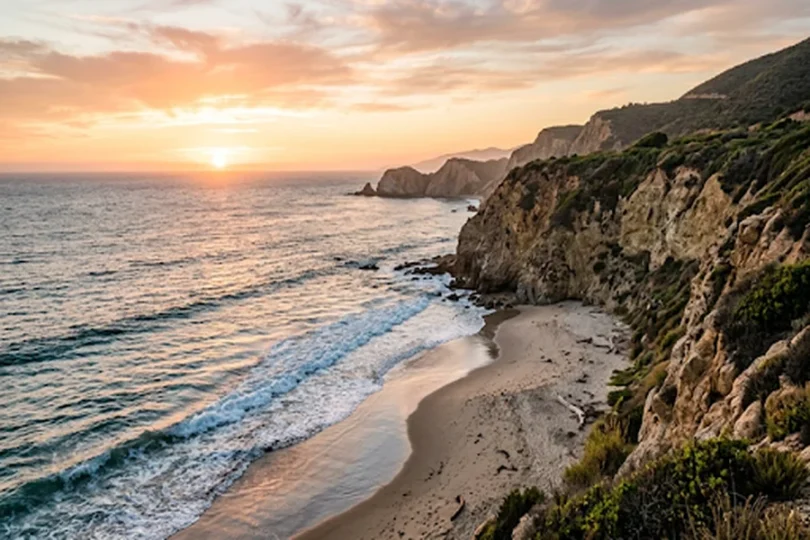

Malibu stretches roughly 21 miles along the Pacific, and the town moves to a rhythm set by tides, traffic, and the marine layer. Understanding that rhythm makes any visit easier. This guide covers what to know before you plan a trip to the region.
The shape of the coastline
Pacific Coast Highway threads Malibu together, from the surf breaks near Topanga on the eastern end to the sea caves at Leo Carrillo in the west. Distances look short on a map, but a Saturday drive from Malibu Pier to Point Dume can easily take an hour.
Locals plan around the light. Mornings often arrive foggy under what residents call the “May Gray” or “June Gloom,” and afternoons open into the wide blue that visitors picture in their heads. Sunsets bring another wave of traffic as day-trippers begin their slow return east.
The shoreline itself alternates between pocket coves, broad public beaches, and bluff-top overlooks. Each stretch has its own character, and choosing a base near your favorite kind of coastline shapes the trip more than any single itinerary.
Cell coverage can drop in the canyons that spill onto the highway, especially past Trancas. Downloading maps and a music playlist before leaving town saves frustration on the longer stretches between coastal neighborhoods.
When to visit and where to stay
Late spring and early fall usually offer the calmest weather and the fewest crowds. Summer weekends fill quickly with visitors from across Los Angeles County, and holiday weeks can double the wait at popular beaches and roadside cafes.
Travelers looking for a quieter base often consider beachside stays along the pacific, which place you near the water without the scale or noise of the larger resort corridors farther south. Waking up to surf sound is part of the appeal.
Book early for July and August, and check for two-night minimums that are common during peak weeks. Winter travelers, by contrast, find open calendars, softer light, and better whale-watching from the bluffs.
Beaches worth planning for
El Matador, with its wind-carved arches and shallow tidepools, is a favorite for photographers at low tide. The staircase down is steep, so pack light and check tide charts before you commit to the walk.
Zuma is broader and better suited to families who want long stretches of clean sand and reliable lifeguards. Parking fills by mid-morning on weekends, and the north end tends to stay quieter throughout the day.
Surfrider Beach, next to the pier, is a right-hand point break that shaped modern surf culture. Newcomers should watch the lineup from the sand before paddling out, since the etiquette is closely guarded.
Point Dume, tucked into a headland at the western edge of the main beaches, offers a short hike, seasonal wildflowers, and one of the more scenic overlooks on the coast. It stays cooler than the sand below, so a windbreaker is worth carrying.
Food, culture, and daily life
The town’s culinary scene mixes casual seafood shacks with polished dining rooms. A grilled fish plate at a roadside counter can feel like the meal of the trip, especially eaten on a picnic bench above the ocean.
Farmers markets run midweek in nearby communities, and the Getty Villa sits at the eastern edge of Malibu with rotating exhibits on antiquity. It makes a rewarding half-day when the marine layer refuses to burn off.
Small galleries, coffee counters, and community bookstores are scattered along PCH. Slowing down to browse them is often the difference between a rushed weekend and a trip that feels genuinely restorative.
Coffee culture skews thoughtful rather than trendy, with small independent roasters supplying most cafes. Ordering a pour-over and watching the surf line change color over an hour is a low-key ritual worth building into any morning.
Conclusion
Malibu rewards travelers who plan around its rhythms rather than fighting them. A little preparation, from timing your drives to reserving your stay well in advance, turns a coastal trip into a genuine escape rather than a series of missed reservations.