
Summer in southeast Oklahoma moves at a different tempo. The Kiamichi foothills push cooler air over Broken Bow Lake at dawn, cicadas fill the pine canopy by noon, and the stars overhead read like a working atlas after dusk. Visitors who arrive in June, July, or August come for this steady rhythm rather than a packed itinerary.
A lake built for slow mornings
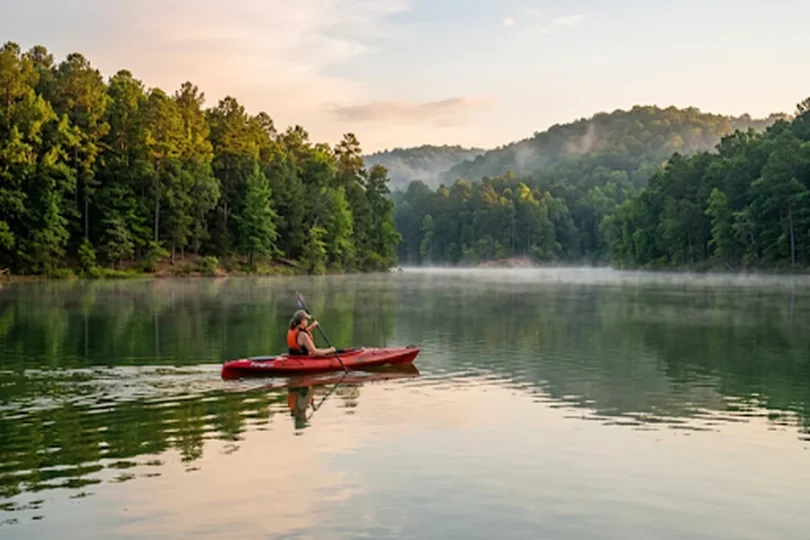
Broken Bow Lake stretches across roughly 14,000 acres of green water inside the Ouachita National Forest. Its shoreline is mostly undeveloped, which keeps the surface calm at first light and leaves plenty of room for a solo kayak or a family paddleboard.
Local outfitters in Hochatown rent single kayaks, tandem canoes, and stand-up paddleboards by the hour or the day. The lake’s north end, near the marina at Beavers Bend, gives newcomers a sheltered practice area before they drift toward the quieter southern coves.
Anglers in flat bottom boats work the submerged timber for largemouth bass and channel catfish. Sunrise sessions that end by nine keep everyone off the open water during the warmest afternoon hours.
Trails that trade heat for shade
Beavers Bend State Park anchors the regional hiking network with more than 24 miles of forest trails. The David Boren, Skyline, and Cedar Bluff loops climb through shortleaf pine and post oak, and most of the mileage stays under a full canopy even in mid July.
Early risers who want a longer day can string these trails into a half marathon route, or drive fifteen minutes north to the McCurtain County Wilderness for old growth cover. Several wooded getaways near Broken Bow Lake sit within a short drive of the trailheads, which makes an unhurried breakfast possible before the summer sun climbs above the ridgeline.
Trail runners should carry two liters of water and a paper map. Cell service inside the state park is patchy, and the summer humidity turns unmarked side paths into confusing green tunnels by late morning.
Rivers, springs, and swimming holes
Below the Broken Bow dam, the lower Mountain Fork River runs cold enough to hold rainbow and brown trout year round. Fly fishers arrive at Beavers Bend Trout Zone II and Zone III soon after sunrise, when the tailwater sits in the low fifties and rises with the daily generation schedule.
Families who prefer to float rather than fish gather at Cedar Creek and Presbyterian Falls. Both spots offer shaded picnic slabs, shallow wading pools, and clear signage that marks the designated swimming areas inside the state park.
The generation schedule from the Oklahoma Department of Wildlife shifts water levels quickly. Check the daily release notice at the park office or visitor center before you wade past the ankle line.
Nights under a Bortle 2 sky
McCurtain County holds one of the darkest official sky readings in Oklahoma, a Bortle Class 2 across most of the wilderness area. On moonless summer nights the Milky Way sits at a steep angle over Broken Bow Lake, and the summer triangle rises early enough to catch before ten.
A gravel pull off near the Cedar Creek boat ramp is a popular naked eye viewing site. Bring a red flashlight, a folding chair, and a printed star map or a phone loaded with a night mode app before you leave the cabin.
Photographers who track satellite passes or the Perseid meteor shower in early August find useful vantage points along Stevens Gap Road. Set up before full dark to avoid startling the local wildlife with a late headlamp scan.
Conclusion
Broken Bow in summer rewards travelers who plan around light and water. Mornings belong to the lake, afternoons to the shaded trails, and the last hours of the day to the sky. That layered pace, more than any single attraction, is what separates a warm weather visit to this corner of Oklahoma from a standard forest getaway.