
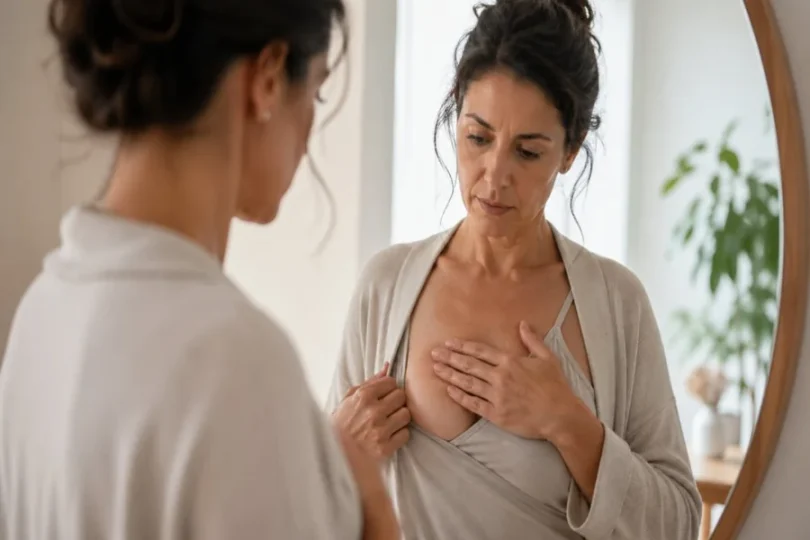

When people think about breast cancer symptoms, they often think about a lump. A new lump in the breast or underarm is one of the most recognized warning signs. But it is not the only one.
Breast cancer can sometimes cause visible changes on the skin, nipple, or surface of the breast. These changes may be subtle at first. They may look like irritation, swelling, a rash, dimpling, thickened skin, or a nipple that looks different from usual.
This is why it is important to know what is normal for your own body. Not every breast skin change means cancer. Many changes can happen because of hormones, friction, infection, eczema, breastfeeding, injury, or other benign causes. Still, a new, persistent, one-sided, or unexplained change should be checked by a healthcare professional.
The goal is not to panic over every mark or rash. The goal is to notice changes early and avoid dismissing symptoms only because there is no lump.
The Common Signs Most People Know
A breast lump is the symptom many people hear about first. It may feel like a hard area, thickening, or swelling in the breast or underarm.
Other commonly known signs include a change in breast size or shape, nipple discharge, nipple pain, or pain in part of the breast. The CDC lists warning signs such as a new lump, thickening or swelling, irritation or dimpling of breast skin, redness or flaky skin, nipple pulling, discharge including blood, size or shape changes, and pain in any area of the breast.
These symptoms do not always mean breast cancer. Some may be related to cysts, hormonal changes, infections, or other non-cancerous conditions. But they should not be ignored if they are new, unusual, or do not go away.
Skin Surface Changes That Are Easy to Miss
Some early warning signs are visible on the surface of the breast rather than felt as a lump. These can be easy to miss because they may look like ordinary skin irritation.
Possible skin surface changes include:
- Dimpling
- Puckering
- Thickened skin
- Redness or darkening
- Swelling
- Rash-like changes
- Flaky or scaly skin
- Skin that feels warm
- A texture that looks like orange peel
The National Cancer Institute lists several skin-related breast cancer symptoms, including scaly or swollen skin on the breast, nipple, or areola; redness or darkening; itching or tingling; rash; general swelling; and dimples or puckering.
A key point is persistence. A temporary mark from clothing is different from skin thickening, redness, dimpling, or swelling that stays, worsens, or keeps returning.
For a deeper look at visible warning signs, this guide on skin surface early breast cancer symptoms explains which surface-level changes may be easy to overlook.
What “Orange Peel” Skin Can Mean
One skin change that is often mentioned in breast cancer awareness is an “orange peel” texture. Medically, this is sometimes called peau d’orange.
It may look like small pits, dimples, or uneven skin texture on the breast. The skin can appear swollen, tight, thickened, or rough. NHS guidance notes that breast skin dimpling may look like orange peel and that redness can be harder to see on black or brown skin.
This type of change can happen when fluid builds up in the skin or when normal drainage is affected. It can be associated with inflammatory breast cancer, but it can also be confused with other conditions. Because it is not possible to know the cause by appearance alone, new orange-peel-like skin texture should be medically evaluated.
Nipple and Areola Changes to Watch
Breast cancer signs can also appear around the nipple or areola.
Changes to watch for include:
- A nipple turning inward
- A nipple that looks flatter than usual
- Crusting or scaling
- A rash on or around the nipple
- Itching or tingling
- Pain in the nipple area
- Discharge that is not breast milk
- Bloody discharge
The World Health Organization includes changes in nipple appearance, changes in the skin around the nipple, and abnormal or bloody fluid from the nipple among possible breast cancer symptoms.
Again, these symptoms can have non-cancerous causes. But if the change is new, one-sided, persistent, or unexplained, it should be checked.
When a Rash Is Not Just a Rash
A breast rash can happen for many reasons. It may be caused by sweat, friction, allergic reactions, eczema, infection, detergent, clothing, or skin sensitivity.
However, some rash-like changes deserve more attention.
A rash should be checked if it:
- Appears mainly on one breast
- Does not improve
- Comes with nipple changes
- Causes scaling, crusting, or bleeding
- Appears with swelling or warmth
- Is associated with dimpling or thickened skin
- Keeps returning in the same area
A simple rash usually improves when the trigger is removed or treated. A persistent or unusual rash should not be dismissed, especially if it affects the nipple or areola.
Why Visible Breast Changes Can Be Missed
Visible breast changes are sometimes missed because people are trained to look only for lumps. If there is no lump, they may assume there is nothing serious to worry about.
Another reason is that some skin changes are painless. A person may not feel ill, and the breast may not hurt. This can make symptoms seem less urgent.
Skin tone can also affect visibility. Redness or color changes may be less obvious on darker skin, so people may notice warmth, swelling, thickening, or texture changes before seeing a clear color change.
Some changes may also resemble common skin problems. A rash may look like eczema. Dimpling may look like a mark from clothing. Swelling may be blamed on hormones. Nipple changes may be ignored if they happen slowly.
Embarrassment can also delay care. Some people feel uncomfortable showing breast or nipple changes to a doctor. But healthcare professionals are used to evaluating these symptoms, and early assessment is important.
When to Contact a Healthcare Provider
You should contact a healthcare provider if you notice a new breast change that does not feel normal for you.
Important changes include:
- A new lump or thickening
- Skin dimpling or puckering
- Orange-peel-like skin texture
- Persistent redness or darkening
- One-sided swelling
- New nipple inversion
- Bloody nipple discharge
- A nipple rash that does not improve
- Skin thickening or warmth
- Breast shape or size changes
- Swelling in the underarm or near the collarbone
- Pain that is new, persistent, or localized
The NHS advises getting medical help for symptoms such as breast or armpit swelling, skin dimpling or redness, changes in breast size or shape, nipple discharge, nipple inversion, or a nipple rash that may look like eczema.
It is better to ask and find out the cause than to wait and guess.
How to Check Your Breasts Without Overthinking
Breast awareness does not mean obsessing over every tiny change. It means becoming familiar with what is normal for you.
A simple routine can help:
Look at your breasts in the mirror. Notice the shape, skin texture, nipple direction, and whether one side looks different from usual.
Raise your arms and look again. Some dimpling or pulling may be easier to see when the skin is stretched.
Check the breast, chest, and underarm area. Notice any new lump, swelling, thickening, or tenderness.
Look at the nipple and areola. Watch for new scaling, crusting, discharge, inversion, or rash-like changes.
Compare with your normal pattern. Breasts can naturally differ in size or shape, and they may change during the menstrual cycle. The concern is a new or persistent change that is unusual for you.
Do not rely on online photos to diagnose yourself. Breast changes can look different from person to person. A healthcare provider can decide whether imaging, examination, or further testing is needed.
Breast cancer is not always noticed as a lump. Sometimes the first sign is a change in the skin, nipple, areola, shape, texture, or surface of the breast.
Most breast skin changes are not cancer. But new, persistent, one-sided, or unexplained changes should be taken seriously. Dimpling, thickened skin, orange-peel texture, nipple inversion, bloody discharge, persistent rash, or unusual swelling should be discussed with a healthcare professional.
The best approach is balanced. Do not panic over every skin change, but do not ignore changes that stay, worsen, or feel unusual for your body.
Knowing your normal can help you notice when something is different. And when something is different, getting it checked is the safest next step.