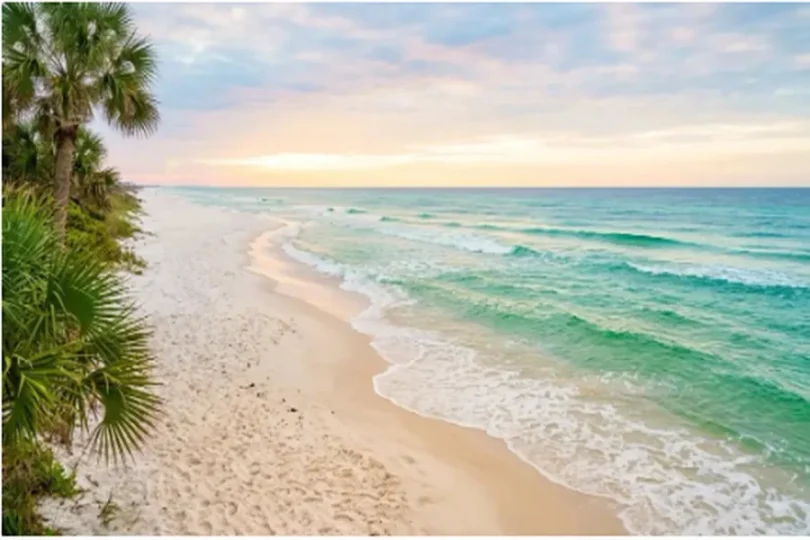

If you love the desert, you love open horizons, quiet light, and a sense of being far from everything. The emerald waters and white dunes of Florida’s Gulf Coast offer a different version of the same feeling, and the shift between the two landscapes is part of the appeal.
Travelers who split their year between Joshua Tree or Sedona and a coastal destination often cite the contrast as the reason. Hot dry mornings in the desert pair well with humid, salt-scented evenings by the Gulf. The two ecosystems balance each other out.
Why the Panhandle, Specifically
Florida has coastline on two sides, and both have merit, but the northwestern Gulf Coast (the Panhandle) has become a popular pick for desert travelers who want something different without the overdevelopment of South Florida.
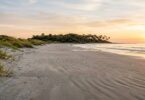
The sand here is unusually white. It is made of pure quartz washed down from the Appalachian Mountains over thousands of years, and it squeaks underfoot when it is dry. The water takes on a distinctive emerald tint in shallow areas, especially from April through October.
Panama City Beach sits roughly at the center of the region. It has 27 miles of uninterrupted shoreline, state parks at both ends, and a walkable commercial district around Pier Park.
Timing Your Trip
Desert travelers instinctively understand shoulder seasons, and the Gulf Coast rewards the same thinking. March and April bring warm water without spring break crowds once school is back in session. Late September through early November offers the year’s clearest water and mildest humidity.
June through August is peak season. Families arrive in volume, rental rates climb, and the beaches get crowded by midmorning. If you want quiet, arrive before Memorial Day or after Labor Day.
Travelers looking at beachfront rental options in Florida should note that gulf-facing properties book earliest; east-west-facing units with side-water views usually stay available longer.
A Note on Hurricane Season
Atlantic hurricane season runs June 1 through November 30, but the Gulf coast typically sees most activity in September. Travel insurance with a named-storm clause is worth the small premium if you book during this window.
What to Do When You Arrive
Desert travel often revolves around hiking, star-gazing, and long slow drives. The Gulf Coast equivalents are paddling, shelling, and dune walking.
St. Andrews State Park, at the eastern end of Panama City Beach, has a jetty that creates a calm protected lagoon on one side and an open Gulf beach on the other. Paddle boards and kayaks are available on site.
Shell Island, reached by shuttle from the park, is an undeveloped barrier island with no buildings, no roads, and some of the most abundant shelling along the Gulf. Visitors who bring their own water and shade can stay all day.
Camp Helen State Park, at the western edge, combines rare ecosystems (coastal dune lake, pine flatwoods, and salt marsh) in one short trail. It rewards travelers who come for landscape variety.
Food and the Local Rhythm
Gulf Coast food culture is casual, seafood-forward, and built around the catch of the day. Grouper, snapper, and shrimp appear on nearly every menu, usually grilled or blackened and served with hushpuppies or cheese grits.
Dinner in the area tends to start early; arriving before 6 pm avoids the wait at busier restaurants. Many places close between lunch and dinner, so plan accordingly.
Breakfast is a local tradition. Diners, coffee shops, and beach-front cafes open by 6 am and serve well past noon. A slow morning meal before the beach crowds build is one of the quiet pleasures of a Gulf Coast trip.
Bringing the Desert Mindset to the Coast
The desert teaches patience with the landscape. Walking slowly. Watching light move across terrain. Sitting still long enough for small things to become visible.
The Gulf Coast responds to the same approach. An early morning walk at the tide line turns up sand dollars and coquinas burrowing into the wet sand. An evening spent watching the emerald water darken into night is, in its own way, as contemplative as a sunset over red rock. The trip just changes the palette.