
Water damage is more than a minor hassle. Over time it can seriously weaken a building and put people at risk.
Moisture often spreads quietly, turning small leaks into big problems that affect floors, walls, roofs, and even foundations. Homes and high-rises alike face these risks. Cities with older buildings and dense construction see this often.
In New York City, for example, rules like New York Local Law 11 stress regular facade and structural upkeep to lower the chance of water-related failures.
What Is Water Damage in Building Structures?
Water damage is any harm caused by unwanted moisture getting into building parts. It might be a slow drip hidden behind a wall or a major flood. The biggest threat is the moisture that soaks into materials you cannot see.
That hidden water weakens strength and shortens the life of the structure. When water reaches the foundation, walls, roof, or framing, it sets off changes that can lead to serious damage.
Common Causes of Water Damage Over Time
Water damage has many sources, and the risk grows with time and wear. A large share comes from aging parts and everyday systems inside buildings.
- Worn pipes, roofs, sealants, and joints that start to leak
- Accidental discharge from plumbing, HVAC, and appliances (about 75% of real estate water losses)
- Storms, heavy rain, and floods that overwhelm drainage
- Clogged gutters and poor grading that push water toward the foundation
- Construction mistakes or low-quality materials that let water in
- Human error, like overflows and skipped maintenance, that turns small issues into big ones
Categories of Water Damage: Surface, Penetration, and Structural
Water damage often falls into three groups. This quick guide shows what each one looks like and why it matters.
| Type | What happens | Examples and risks |
| Surface | Visible damage to finishes | Peeling paint, stained drywall, warped flooring; usually cosmetic if fixed early |
| Penetration | Moisture soaks into materials | Wet drywall, insulation, subfloors; mold growth; can lead to structural harm if ignored |
| Structural | Core elements are weakened | Damage to foundation, beams, load-bearing walls, or roof; safety risks and high repair costs |
How Water Damage Progresses Over Time
Water damage does not stay the same. It moves through stages. The longer moisture stays, the worse the results.
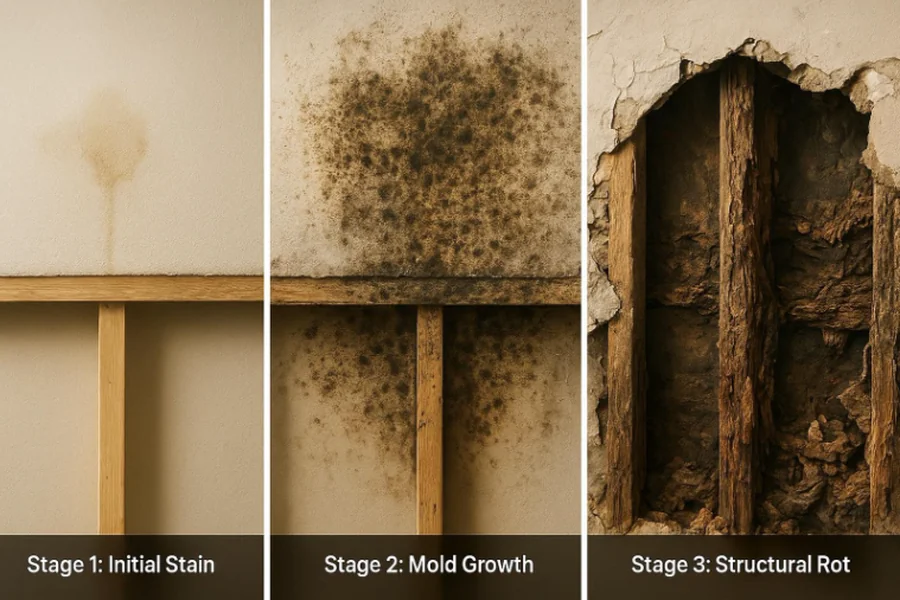
Stages of Damage: Immediate, Secondary, and Delayed Effects
- Immediate effects: Materials get wet and change shape. You may see stains, swelling, or warping. After a burst pipe, carpets and ceilings get soaked. Fast action at this stage limits harm.
- Secondary effects: Hidden moisture leads to mold within 24-48 hours in humid areas. Metals start to corrode. Drywall and insulation break down and lose strength.
- Delayed effects: Long exposure causes wood rot, foundation movement, and weaker concrete or masonry. Floors sag, walls bow, and cracks spread. Wiring may short, which can lead to fire hazards.
Timeline: Short-Term versus Long-Term Exposure
| Exposure | Main tasks | Likely outcomes |
| Short-term (days to a few weeks) | Fast water removal and drying; basic cleanup | Lower chance of mold; less damage to finishes and materials |
| Long-term (weeks to years) | Major repairs and sometimes rebuilds | Wood rot, metal rust, foundation shift, loss of strength; high cost and long downtime |
What Factors Influence the Severity of Structural Water Damage?
Some buildings handle water better than others. The result depends on materials, upkeep, age, design, climate, and site conditions.
Material Quality and Maintenance Practices
Better materials and good installation stand up to moisture longer. Some modern products shed water or dry faster. Poor work or weak materials let water in sooner and cause faster decay.
Care also matters. Regular checks and quick fixes catch small leaks before they spread. Skipping roof repairs, leaving gutters clogged, or ignoring drips gives water time to damage wood, drywall, and framing.
For durable, watertight results that protect your property long-term, work with Nova Construction Services — specialists in exterior restoration who combine quality materials with expert installation to stop moisture problems before they start.
Building Age and Design Vulnerabilities
Older buildings often have worn pipes, roofs, and foundations. Historic details and materials can soak up water and may need special repair methods.
Newer designs can have risk points too. Green roofs, hidden piping, and complex systems need careful planning and upkeep. In high-rises, booster pumps raise water pressure, which increases the chance of high-pressure line breaks and major flooding.
Local Climate and Water Table Levels
Rain, storms, humidity, and flooding raise water risk. In places like Louisiana, high humidity, frequent storms, and a high water table drive mold growth and foundation movement.
A high water table pushes water against foundations and basement walls. That pressure forces water through cracks and pores and keeps things damp, which can lead to serious foundation damage. Sites that flood or drain poorly need strong waterproofing and drainage.
Visible and Hidden Signs of Structural Water Damage
Spotting problems early saves money and reduces stress. Some signs are easy to see. Others are hidden and call for tools or expert help.
Interior Indicators: Cracks, Sagging, and Stains
- Stains on ceilings, walls, or floors (yellow to dark brown)
- Warped or buckled floors; cupping or crowning in hardwood; lifted laminate or vinyl
- Soft, crumbly drywall
- Musty smells that point to hidden moisture or mold
- New or growing cracks in walls or floors
- Doors and windows that stick or do not line up
- Uneven or sagging floors from weakened joists or subfloor
External Clues: Foundation Shifts and Efflorescence
- Foundation cracks, especially horizontal ones
- Uneven soil or new cracks in nearby driveways or patios
- Efflorescence (white powder) on brick or block, showing regular moisture movement
- Rust on metal parts like railings and exposed steel
- Swollen or warped wooden frames, siding, or trim
- Roof issues: missing shingles, bad flashing, clogged gutters
- Standing water near the building after rain, which hints at poor drainage
What Are the Structural Risks of Water Damage in Buildings?
Long-term moisture weakens the parts that hold a building up. The risks below show how water can affect strength and safety.
Foundation Deterioration and Settlement
Water enters through cracks or porous concrete and stays there after storms or floods. Clay soils swell when wet and shrink when dry, which makes foundations move. You may see cracks in foundations, walls, ceilings, and floors. If the foundation settles or sinks, the whole structure becomes uneven and unsafe.
Compromised Support Structures and Framing
Wood beams, joists, and studs lose strength as they stay wet. Over time, they cannot carry the same loads. Floors may sag, and walls may bow. If ignored, parts of the structure can fail.
Wood Rot and Loss of Load-Bearing Capacity
Moist areas like basements, bathrooms, and kitchens are prone to wood rot. Fungi break down wet wood, making it soft and weak. Rot in beams, joists, and posts cuts their ability to hold weight and can lead to major failures.
Corrosion of Steel and Metal Components
Metal parts rust with ongoing moisture. Fasteners, plates, and even structural steel lose strength as corrosion spreads. Plumbing pipes can corrode and burst, adding more water to the problem. Over time, this weakens the frame and raises the chance of structural issues.
Weakening of Concrete and Masonry Materials
Concrete and masonry can soak up water through cracks and pores. In cold areas, freeze-thaw cycles cause spalling and cracking. Mortar can break down, leading to loose joints and efflorescence. Brick and block walls then lose strength and become easier to damage.
Prevention and Mitigation Strategies for Structural Water Damage
Stopping water early costs less than fixing heavy damage. A steady plan of checks, repairs, and moisture control limits risk.
Routine Inspections and Early Detection Methods
- Look for stains, peeling paint, and swollen surfaces inside
- Check pipes, valves, and fixtures for drips
- Inspect roofs for bad shingles and flashing
- Keep gutters clear and downspouts moving water away from the foundation
- Watch for cracks in foundations and exterior walls
- Hire pros for periodic inspections to catch hidden issues
Waterproofing and Drainage Solutions
- Use exterior membranes or interior sealants on foundations
- Install French drains to move groundwater away
- Add sump pumps in basements with high water tables
- Grade soil so water flows away from the building
- Maintain gutters, downspouts, and splash blocks
- Use proper roof underlayment, flashing, and quality roofing materials
Technological Tools for Leak Monitoring and Moisture Control
- Smart leak sensors that send phone alerts in key spots (water heaters, under sinks, basements)
- Automatic shut-off valves that cut the main water line during a leak
- Moisture meters to find hidden damp areas in walls, floors, and ceilings
- Dehumidifiers to keep indoor humidity in check and limit mold growth
Maintenance Recommendations for Longevity
- Seasonal tasks: clean gutters, check roofs, test sump pumps
- Fix small leaks right away
- Vent bathrooms and kitchens well to cut condensation
- Seal cracks in foundations and exterior walls
- Shape landscaping to move water away from the building
- In larger buildings, inspect HVAC and shared appliances on a schedule
Water damage can quietly eat away at a building’s strength and safety. It weakens foundations and framing, feeds mold and rot, and drives up repair bills and insurance claims. A steady plan helps: regular upkeep, smart leak alerts, good waterproofing, and solid drainage. With quick action and ongoing care, owners can protect people, preserve the structure, and avoid big repair costs later.