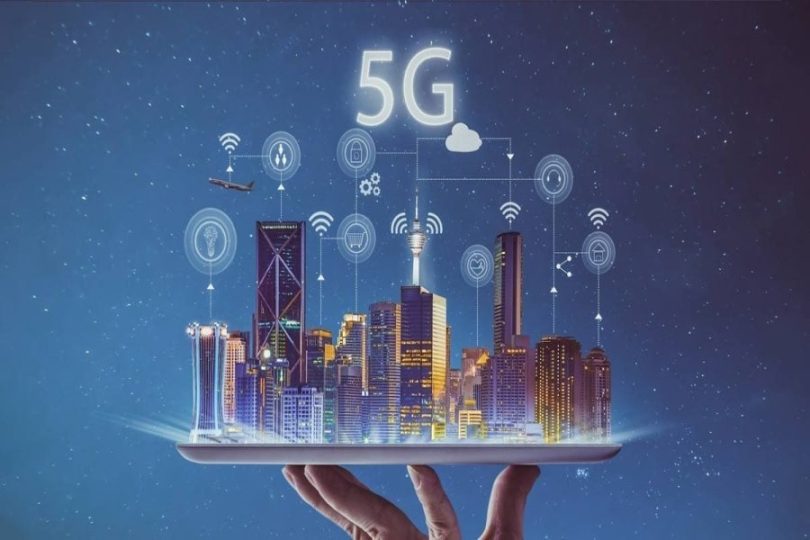

5G, the fifth generation of wireless technology, is more than just a faster network. It represents a significant leap forward in mobile connectivity, offering faster speeds, lower latency, and the ability to connect a greater number of devices simultaneously. As 5G continues to roll out globally in 2025, both businesses and consumers are starting to experience the profound impacts of this revolutionary technology. In this article, we will explore what 5G means for businesses and consumers, and how its deployment is reshaping industries and everyday experiences.
What is 5G?
5G is the latest generation of wireless technology, succeeding 4G LTE. While 4G was a massive upgrade over 3G, 5G promises to deliver even greater benefits. Key features of 5G include:
-
Faster Speeds: 5G can offer download speeds up to 100 times faster than 4G, with theoretical speeds of up to 10 Gbps.
-
Lower Latency: Latency, or the delay between sending and receiving data, is significantly reduced in 5G networks, allowing for real-time communication and interaction.
-
Increased Connectivity: 5G can support a massive number of devices simultaneously, making it ideal for the Internet of Things (IoT) and smart cities.
-
Improved Reliability: 5G provides more stable connections, even in crowded areas, ensuring that businesses and consumers experience uninterrupted service.
With these capabilities, 5G is set to transform both business operations and consumer experiences, offering faster, more efficient solutions across a wide range of industries.
1. The Impact of 5G on Business Operations
For businesses, 5G opens up a wide range of opportunities for innovation, efficiency, and customer engagement. Here’s how 5G is changing the business landscape:
a) Faster Data Transfer for Real-Time Analytics
One of the most significant advantages of 5G for businesses is the ability to transfer large volumes of data at lightning speeds. This has huge implications for industries that rely on real-time data, such as finance, healthcare, and retail.
For example, in the financial sector, 5G allows for faster transactions, real-time analytics, and the ability to handle high-frequency trading more efficiently. Retailers can use 5G to instantly update inventory systems, analyze customer behavior in real-time, and offer personalized shopping experiences based on data from connected devices.
b) Enhanced Remote Work and Collaboration
With the rise of remote work, 5G offers businesses the opportunity to improve collaboration and productivity. The high-speed, low-latency capabilities of 5G allow employees to work more effectively from anywhere in the world, using tools like virtual meetings, cloud-based software, and real-time document sharing.
In industries like manufacturing and engineering, 5G enables remote teams to collaborate on design projects in real time, accelerating product development cycles. Similarly, construction companies can use 5G-powered drones for surveying and monitoring projects remotely, improving efficiency and safety.
c) IoT and Smart Devices Integration
5G is set to accelerate the growth of the Internet of Things (IoT), which involves connecting everyday devices to the internet for data sharing and automation. With 5G’s ability to support millions of connected devices, businesses can scale their IoT systems and gather data from a wider array of sensors, devices, and machines.
For example, smart factories powered by 5G can enable real-time monitoring of production lines, predictive maintenance of machinery, and automated inventory management. In agriculture, farmers can use 5G-powered sensors to monitor soil conditions, weather patterns, and crop health, leading to more efficient and sustainable farming practices.
d) Improved Customer Experiences
5G’s capabilities also allow businesses to offer more immersive and interactive customer experiences. For instance, in retail, augmented reality (AR) and virtual reality (VR) applications can become mainstream. Consumers will be able to try products virtually, such as testing furniture in their homes or trying on clothes through virtual mirrors, all in real-time thanks to 5G’s fast data transfer speeds.
In the automotive industry, 5G supports the development of autonomous vehicles, offering real-time communication between vehicles and infrastructure, reducing traffic accidents, and optimizing driving routes. This can transform logistics, ride-sharing services, and urban mobility.
2. The Impact of 5G on Consumers
For consumers, 5G promises to revolutionize how we use mobile devices, access the internet, and interact with technology on a daily basis. Here’s how 5G is transforming the consumer experience:
a) Faster Mobile Internet and Streaming
With 5G, consumers will experience blazing-fast download and upload speeds. This means that streaming HD and 4K videos on platforms like Netflix, YouTube, or Disney+ will become smoother, with less buffering and higher-quality visuals.
Consumers can download large files, such as movies, games, or apps, in seconds rather than minutes. Gaming is also set to undergo a major transformation, with 5G enabling cloud gaming, where gamers can play high-performance games on their mobile devices without the need for expensive hardware.
b) Enhanced Mobile Experiences with AR and VR
5G enables the full potential of augmented reality (AR) and virtual reality (VR) experiences on mobile devices. With the increased bandwidth and reduced latency of 5G, consumers can enjoy immersive AR and VR applications for gaming, education, entertainment, and retail.
For example, virtual reality shopping experiences will allow consumers to browse products in a virtual store, try them on, and make purchases—all from the comfort of their homes. Virtual tourism experiences will allow users to explore destinations in VR, all in real-time and with ultra-low lag.
c) Smarter Homes and IoT Devices
The rise of 5G will lead to an explosion in the number of connected devices within the home. Smart devices like thermostats, lights, security cameras, and voice assistants will be able to communicate more efficiently, creating smarter homes that are fully integrated and more responsive.
Consumers will be able to control their entire home ecosystem with more precision, from adjusting the temperature to managing entertainment systems, all through voice commands or mobile apps.
d) Enhanced Health and Wellness Applications
5G also opens up new possibilities for healthcare applications that directly impact consumers. For instance, telemedicine services will become more effective, offering real-time video consultations with doctors, remote monitoring of vital signs, and more accurate diagnostics. Wearable devices like fitness trackers and smartwatches will become more powerful, transmitting data in real-time to healthcare professionals for continuous monitoring of a patient’s health. Accessories such as Apple Watch bands will also play a role, providing comfort, style, and customization options for users who rely on these devices to track and manage their wellness.
Additionally, health-focused AR apps can assist in fitness training, rehabilitation, and even mental health, offering personalized feedback and immersive experiences to help individuals reach their health goals.
3. The Challenges of 5G Adoption
While the benefits of 5G are undeniable, the rollout and adoption of the technology come with challenges:
-
Infrastructure Costs: Building the necessary infrastructure for 5G, including cell towers and fiber-optic networks, is expensive. It will take time to expand the coverage, especially in rural and underserved areas.
-
Security Concerns: As more devices connect to the internet, there is a greater risk of cyberattacks. Ensuring that 5G networks are secure is critical to protecting personal data and business operations.
-
Regulatory Hurdles: Governments and regulatory bodies must address issues such as spectrum allocation and privacy concerns to ensure the safe and fair use of 5G technology.
-
Device Compatibility: Consumers will need to upgrade their devices to access 5G networks. While many new smartphones are 5G-ready, older models will not be able to take full advantage of the technology.
Conclusion: Embracing the Future with 5G
The rise of 5G technology is not just about faster mobile internet—it’s about creating a connected world that transforms how businesses operate and how consumers interact with technology. From enhancing business operations to improving the everyday experiences of consumers, 5G is laying the groundwork for a smarter, more efficient future.
As we move forward into 2025 and beyond, the widespread adoption of 5G will enable new innovations, create opportunities for businesses to thrive, and give consumers access to services and experiences that were once only dreamed of. Whether it’s gaming, healthcare, transportation, or smart homes, 5G is poised to revolutionize nearly every aspect of our digital transformation consulting lives.
FAQs
What is 5G?
A1: 5G is the fifth generation of wireless technology, offering faster speeds, lower latency, and the ability to connect more devices simultaneously, revolutionizing industries and consumer experiences.
How will 5G impact business operations?
A2: 5G will improve data transfer speeds, enhance remote work, enable IoT integration, and create new opportunities for real-time analytics, improving efficiency and customer engagement.
What are the benefits of 5G for consumers?
A3: 5G offers faster internet speeds, smoother streaming, enhanced gaming experiences, better IoT integration for smart homes, and immersive AR/VR applications.
Will 5G replace Wi-Fi?
A4: 5G is not meant to replace Wi-Fi but to complement it. It offers faster speeds and greater connectivity, particularly in areas where Wi-Fi coverage is limited.
When will 5G be available everywhere?
A5: While 5G is being rolled out in many areas, full global coverage may take several years due to infrastructure challenges, especially in rural regions.