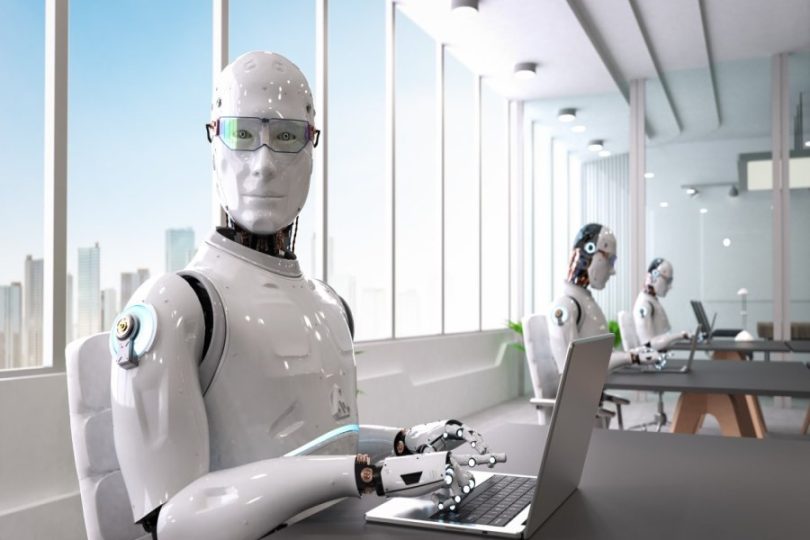

Artificial Intelligence (AI) is no longer just a futuristic concept. It’s here, and its impact is being felt across every industry, transforming how businesses operate, how consumers interact with technology, and even how we perceive the future of work. From automating routine tasks to revolutionizing customer service and data analysis, AI is playing an increasingly important role in shaping industries. In this article, we’ll explore how AI is transforming various sectors and what the future holds for businesses and consumers alike.
The Rise of AI: A Brief Overview
AI refers to the simulation of human intelligence processes by machines, particularly computer systems. These processes include learning (the ability to improve performance based on data), reasoning (solving problems), and self-correction. Over the past few years, advancements in machine learning, natural language processing (NLP), and robotics have led to significant breakthroughs, enabling AI to perform tasks that were once thought to be uniquely human.
In 2025, AI is poised to become an even more integral part of business and everyday life. While AI has already made a significant impact, its continued growth and refinement will only increase its influence across industries. Here’s how AI is transforming key sectors.
1. AI in Healthcare: Revolutionizing Patient Care
The healthcare industry has been one of the most impacted by AI technology. AI applications in healthcare range from diagnosing diseases to personalizing patient treatment. AI-driven tools are now capable of analyzing medical data, such as patient records and medical imaging, to identify patterns and make predictions that would be difficult for humans to detect.
Key applications of AI in healthcare:
-
Diagnostic Assistance: AI algorithms are now capable of diagnosing conditions like cancer, heart disease, and neurological disorders by analyzing medical images with higher accuracy than some human doctors. AI systems like Google Health’s AI have been used to interpret mammograms and detect breast cancer with a level of precision that rivals human doctors.
-
Personalized Medicine: AI can analyze patient data, including genetics and lifestyle factors, to create personalized treatment plans. This ensures that patients receive the most effective treatments based on their unique medical history and characteristics.
-
Virtual Health Assistants: AI-powered chatbots and virtual assistants are helping healthcare providers interact with patients more efficiently. These systems can handle appointment scheduling, provide medical advice, and offer follow-up care, reducing the burden on medical staff.
The future of AI in healthcare promises even more advanced tools for disease prevention, better access to care, and more efficient medical systems.
AI technology plays a major role in digital marketing, from content creation to audience targeting, and Techsslaash covers the latest AI trends that help businesses grow online.
2. AI in Finance: Revolutionizing Banking and Investment
The financial industry has embraced AI in many ways, from automating processes to offering more personalized services. AI is enhancing the efficiency of financial institutions, improving decision-making, and offering customers smarter ways to manage their finances.
Key applications of AI in finance:
-
Fraud Detection: AI is revolutionizing fraud detection by analyzing vast amounts of transaction data in real time. Machine learning algorithms can quickly identify unusual patterns and flag fraudulent transactions, minimizing losses for financial institutions and customers.
-
Robo-Advisors: AI-powered robo-advisors offer personalized investment advice and portfolio management. By analyzing market data and individual risk preferences, these systems can create custom investment strategies without human intervention.
-
Credit Scoring and Risk Management: Traditional credit scoring models rely heavily on historical data, but AI can analyze more diverse data points to assess an individual’s creditworthiness. This provides more accurate risk assessments and opens up lending opportunities to underserved populations.
-
Chatbots and Customer Service: Many banks and financial institutions are using AI-driven chatbots to provide instant customer service, answer inquiries, and help with transactions, offering a more streamlined and efficient customer experience.
As AI continues to evolve, the financial industry will benefit from even more advanced predictive analytics, enhanced customer service, and better risk management.
3. AI in Manufacturing: Streamlining Production and Supply Chains
In the manufacturing sector, AI is improving production efficiency, reducing downtime, and optimizing supply chains. AI-powered systems can predict maintenance needs, optimize production schedules, and enhance product quality—all of which contribute to increased profitability and reduced operational costs.
Key applications of AI in manufacturing:
-
Predictive Maintenance: AI is helping manufacturers minimize costly downtime by predicting when machines and equipment are likely to fail. By analyzing sensor data and historical maintenance records, AI can provide early warnings and recommendations for maintenance, ensuring smoother operations.
-
Robotics and Automation: AI-driven robots are increasingly being used in manufacturing plants to perform repetitive tasks, such as assembly, packaging, and quality control. These robots can work faster and more accurately than humans, improving efficiency and reducing the risk of errors.
-
Supply Chain Optimization: AI can analyze supply chain data in real time, helping businesses predict demand, optimize inventory levels, and reduce waste. AI-powered tools can also optimize delivery routes, ensuring products get to customers faster and at a lower cost.
-
Product Design: AI algorithms can assist in product design by analyzing customer preferences and suggesting features or improvements. By utilizing AI in the design phase, manufacturers can create products that better meet consumer needs and are more likely to succeed in the market.
AI is transforming manufacturing by improving operational efficiency, reducing costs, and enabling faster innovation.
4. AI in Retail: Enhancing Shopping Experiences
In retail, AI is helping businesses provide more personalized experiences to customers while streamlining inventory management and enhancing supply chains. From virtual try-ons to AI-powered recommendations, the future of shopping is becoming more interactive and tailored to individual preferences.
Key applications of AI in retail:
-
Personalized Shopping: AI can analyze customer behavior and preferences to provide personalized product recommendations. Retailers like Amazon use AI to suggest products based on past purchases, browsing habits, and even what other customers have bought.
-
AI-Powered Chatbots: Many online retailers now use AI-driven chatbots to assist customers in real time. These bots can help with product searches, answer questions, and even complete purchases, improving the overall shopping experience.
-
Inventory Management: AI helps retailers optimize their inventory by predicting which products will be in demand and when. This reduces overstocking, lowers inventory costs, and ensures popular items are always available for customers.
-
Virtual Try-Ons: AI-powered augmented reality (AR) tools allow customers to virtually try on clothing, accessories, or even makeup before making a purchase. This improves customer confidence in their choices and reduces returns.
AI is revolutionizing retail by creating more personalized and efficient shopping experiences for customers, while also improving operational efficiency for businesses.
5. The Future of AI: Emerging Trends and Technologies
As AI continues to develop, we can expect even more groundbreaking innovations. Some emerging trends in AI that will shape the future include:
-
Explainable AI (XAI): One of the challenges with AI is the “black box” nature of many algorithms, where it’s difficult to understand how decisions are made. Explainable AI aims to make AI decision-making more transparent, ensuring that systems are accountable and understandable to humans.
-
AI in Creativity: AI is increasingly being used in creative fields such as music, art, and literature. AI algorithms are now capable of composing music, generating artwork, and even writing stories, blurring the lines between human and machine-generated content.
-
AI for Climate Change: AI is being used to develop solutions for combating climate change. From optimizing energy usage in smart cities to predicting climate patterns, AI has the potential to play a significant role in addressing global environmental challenges.
-
Ethical AI: As AI becomes more integrated into our lives, the ethical considerations surrounding its use are becoming more important. Issues such as privacy, bias, and job displacement are prompting governments and organizations to develop regulations and frameworks for responsible AI use.
Conclusion: AI’s Transformative Potential
Artificial Intelligence is undoubtedly reshaping industries, creating new opportunities, and transforming the way we live and work. From healthcare to retail, finance to manufacturing, AI is driving efficiencies, improving customer experiences, and enabling innovation. As AI technology continues to evolve, its potential to revolutionize industries and society at large is immense.
For businesses, embracing AI is no longer optional—it’s essential for staying competitive in the fast-paced, digital-first world of 2025 and beyond. By adopting AI-powered solutions, companies can unlock new growth opportunities, improve decision-making, and enhance their overall performance.
FAQs
How does AI benefit businesses?
A1: AI helps businesses automate tasks, improve decision-making, personalize customer experiences, and optimize operations, leading to increased efficiency and profitability.
What industries are most affected by AI?
A2: AI is transforming industries such as healthcare, finance, manufacturing, retail, and customer service by automating processes and improving outcomes.
Will AI replace jobs?
A3: While AI will automate many tasks, it is more likely to augment human work rather than completely replace it, creating new roles in areas like AI management and data science.
What is Explainable AI (XAI)?
A4: Explainable AI refers to AI systems designed to provide clear, understandable explanations for their decisions, making them more transparent and accountable.
What is the future of AI in creativity?
A5: AI is increasingly being used in creative fields like music, art, and writing, and is expected to become an even more important tool for artists and content creators in the future