
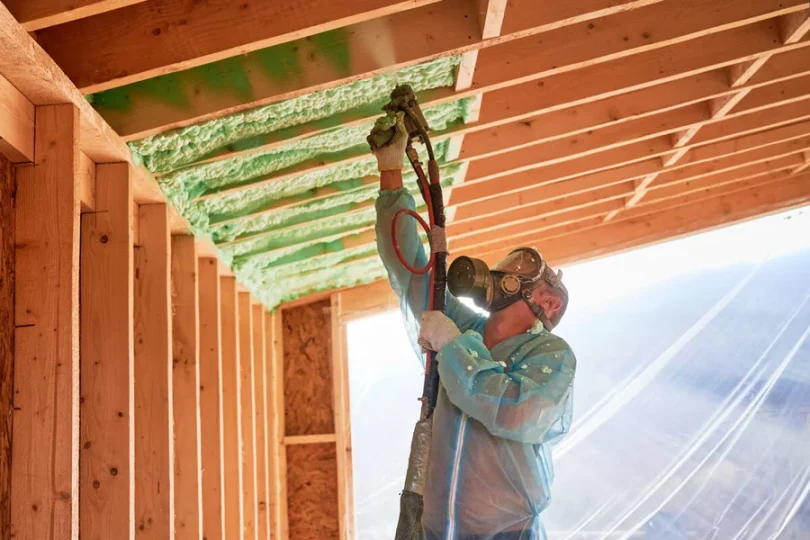

Sound problems in living spaces are often caused by two paths: air leakage and vibration through building materials. Spray foam insulation can help with the first path by sealing cracks and gaps that let sound travel like air, especially around rim joists, electrical penetrations, top plates, and leaky wall cavities. When those air paths are reduced, everyday noise such as traffic, neighbor activity, and HVAC airflow becomes less noticeable, and rooms feel calmer. However, spray foam is not a complete soundproofing system on its own because it does not fully block structure-borne noise that travels through studs, joists, and drywall. For footsteps, bass, and impact noise, you still need assemblies that decouple surfaces and add mass. Spray foam can still play a valuable role in a sound plan because it improves the airtightness of the cavity, reduces flanking paths, and supports comfort by controlling drafts that make spaces feel louder and less private. Understanding where foam helps and where it should be paired with other materials is key to using it effectively for sound attenuation.
Seal air paths for quieter rooms.
-
How sound moves and why air sealing matters
Airborne sound can travel through any opening that allows air movement, including tiny gaps that are easy to overlook during construction. A small crack around a pipe penetration or an unsealed electrical box can act like a miniature speaker port, letting voices and street noise leak into a room. Spray foam works well in these locations because it expands into irregular shapes and bonds to wood, masonry, and sheathing to seal the path. In living spaces, this can reduce noise from adjacent garages, mechanical rooms, and exterior walls, where leakage is often the main reason a room feels loud. Air sealing also improves sound privacy between rooms when there are shared chases, such as plumbing walls, stair cavities, and recessed light openings that connect to an attic. The benefit is not only reduced noise but also a more stable indoor environment, because drafts are reduced; drafts can carry sound and create a perception of “hollow” rooms. Still, it is important to recognize that sealing alone will not stop impact noise, such as footsteps from an upper level. It will help with voices, TV sound, and outdoor airborne noise, especially when combined with dense insulation or added drywall layers that increase mass.
-
Open cell versus closed cell foam for sound goals
Open-cell spray foam is often considered more effective for airborne sound attenuation in stud cavities because it is softer and can absorb some sound energy as air moves through its porous structure. It fills gaps and creates an air seal while also reducing echo-like transmission through a cavity. Closed-cell foam is denser and stiffer. While it seals air pathways effectively, it can transmit vibration more readily through rigid connections, which can limit its sound benefits in certain assemblies. The right choice depends on what you are trying to quiet. If the priority is exterior airborne noise and the wall assembly already has adequate mass, open-cell foam can help keep the interior quieter by sealing and dampening within the cavity. If the priority includes moisture resistance or higher thermal resistance in a limited space, closed-cell foam may be selected for reasons beyond sound. During planning, homeowners often click Visit Website links to installers to compare foam options and use cases, but the decision should also consider the full sound assembly, not just foam. In many sound-focused projects, foam is paired with resilient channels, acoustic caulk, and heavier drywall, so the air-seal benefit is matched by vibration control and mass.
-
Where spray foam performs well for noise reduction
Spray foam tends to deliver noticeable noise improvements in areas where leakage is the dominant problem. Rim joists are a strong example because they often allow air to leak from outdoors or crawl spaces, bringing drafts and noise into the home. Foaming the rim joist can reduce street noise and exterior rumble while also improving comfort near floors and baseboards. Garage-adjacent rooms also benefit when foam seals the shared wall and any penetrations, reducing both odor transfer and noise intrusion. Attic bypasses are another common source. When recessed lights, bath fan housings, and top plate gaps allow attic air to communicate with the living space, sound can travel through those openings. Sealing those bypasses with foam reduces airborne sound paths and can make bedrooms feel more private. In renovations, foam can also help around plumbing penetrations and behind tubs or shower surrounds on exterior walls, where insulation is often missing or poorly installed. These targeted uses can make a home feel quieter without the cost of full soundproof assemblies. The key is to identify where sound is traveling and whether it is mainly airborne through gaps or structure-borne through framing.
Quieter rooms through sealed gaps
Spray foam insulation can reduce noise in living spaces primarily by sealing the air paths that carry airborne sound through cracks, penetrations, and leaky cavities. Open-cell foam often provides better sound attenuation in cavities for voices and outdoor noise. In contrast, closed-cell foam offers strong air sealing and different structural behavior, which may be chosen for thermal or moisture reasons. The largest sound gains usually come from targeted areas such as rim joists, garage-adjacent walls, and attic bypasses, where leakage is common. For stronger sound control between rooms, spray foam works best as part of a layered assembly that adds mass and reduces vibration transfer through decoupling details. When combined with thoughtful sealing, door improvements, and HVAC noise management, spray foam helps create a calmer, more private indoor environment without relying on a single material to address every sound challenge.