
The North Fork of Long Island has built its identity quietly. The South Fork captures the headlines, but the northern peninsula has cultivated a slower, less polished version of the East End that rewards travelers who arrive without a packed schedule.
A long weekend here works most easily when the days are loose and the calendar is mostly empty. Three or four anchors, lots of room to drift, and a few simple rituals carry the trip.
What Slow Travel Looks Like Here
Mornings start with a porch or a beach walk. The bay side of the North Fork faces north, which gives soft, even light most of the day. The Sound side runs colder and rockier; both have their own draws.
Mid-mornings drift toward farm stands, roadside coffee, or a stop at a baker who knows the regulars. Lunch is rarely planned more than an hour in advance. The restaurant culture is friendly to walk-ins for the first meal of the day.
Afternoons reward a single, light activity. A vineyard tasting, a paddle out of a small inlet, a bike ride along the back roads, or a slow drive between towns. Anything more ambitious tends to break the rhythm.
The Towns Worth Pacing
Greenport is the most obvious anchor. The harbor is working, the ferry to Shelter Island leaves several times a day, and the food scene has a coastal-village density that rewards walking rather than driving.
Cutchogue and Mattituck stretch the trip inland. Tasting rooms, farm stands, and quiet residential streets fill the spaces between. Many travelers booking homes on the North Fork choose a base in this middle stretch because the rest of the region opens up within a fifteen-minute radius.
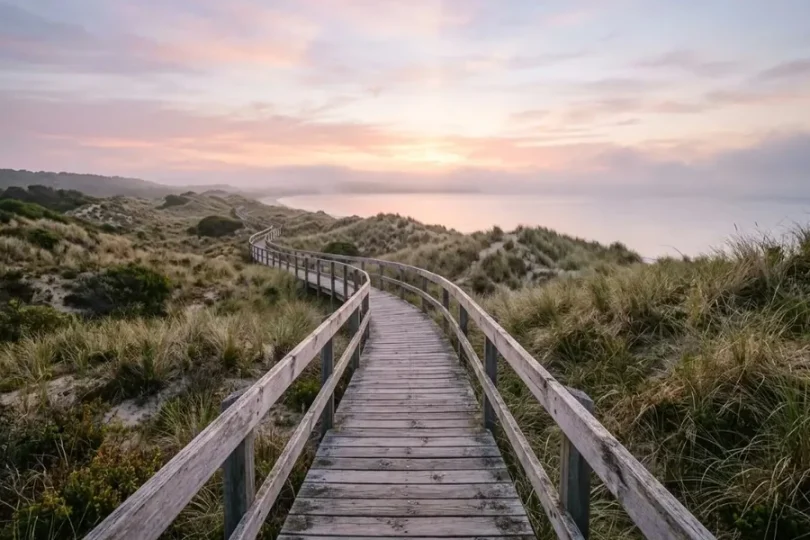
Orient is the eastern tip and the quietest of the bunch. Orient Beach State Park is a deliberately uncrowded experience: long walks, little fanfare, mostly local visitors in shoulder seasons.
Rituals That Work Across Seasons
A morning coffee from one of the small roasters sets the day. Choose a place with outdoor seating and stay longer than feels efficient. The North Fork rewards lingering more than rushing.
An afternoon farm stand stop is the second easy ritual. Vegetables, eggs, flowers, oysters depending on the season. The act of cooking part of one meal a day, even simply, settles the trip into a different mode than constant restaurant dining.
An evening walk on the bay or sound, after sunset, replaces the typical urban downtime of phones and screens. The temperature drops, the light fades slowly, and the trip resets for the next morning.
Strongest Times of Year for the Quietest Pace
Late spring, especially May and the first half of June, is one of the most underrated windows. The vineyards are open, the farm stands are returning, and the high-summer crowds have not arrived yet.
Late September through late October layers harvest energy onto cooler weather. Mornings are crisp, afternoons are warm enough for a walk, and the vineyards are at their most active.
Winter weekends are genuinely quiet and sometimes surprisingly mild. A handful of restaurants and tasting rooms stay open year-round, and the empty beaches are an experience in their own right.
Travel Logistics Most People Underestimate
Friday afternoon traffic out of Manhattan can stretch the drive significantly. Leaving Friday morning or early Saturday helps. The Long Island Rail Road and the Hampton Jitney both reach the North Fork and remove the parking and driving question entirely.
Reservations matter for dinners during peak weekends and are useful but not essential outside them. Tasting rooms increasingly take bookings, and mid-week visits remain the most relaxed option.
Cell coverage is reliable. Wi-Fi is generally good in homes and tasting rooms. There is no genuine wilderness here, just a pace that asks you to slow down.
A successful North Fork weekend rarely produces a long list of activities. It produces a slower internal clock, a few new food memories, and a sense of how a place looks when nothing is pushing it forward. For travelers used to packing days too full, that is the entire point.