
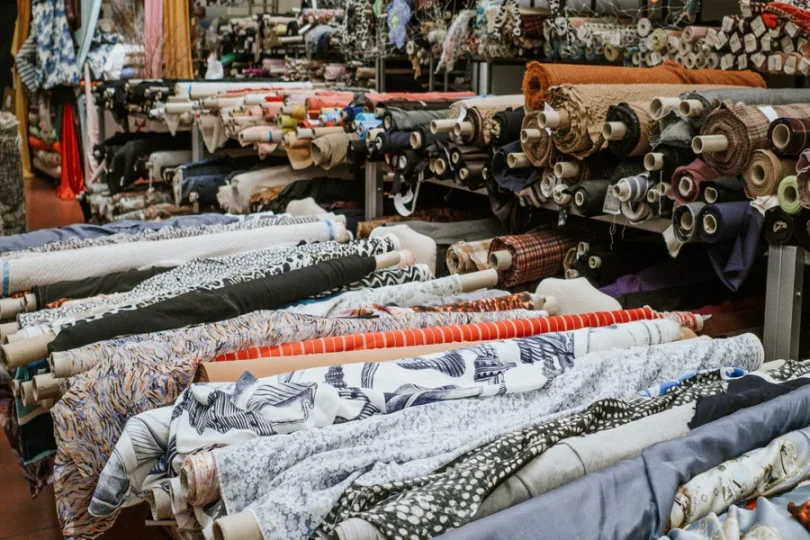

What Deadstock Fabric Really Means
When we talk about deadstock fabric we are not talking about damaged leftovers or unwanted scraps. We are talking about beautiful, unused materials that were originally created for designers and fashion houses but never made it into production. Sometimes a collection changes direction and the new color palette no longer matches. Sometimes a mill produces a little more than needed. And sometimes a roll is simply too unique, too bold or too experimental to fit the final runway story.
Before we started working with deadstock, we imagined it as something limited or imperfect. But the more roles we touched, the more we understood how wrong that assumption was. These fabrics feel rich have depth and carry a quiet beauty that comes from skilled weaving and thoughtful materials. We work directly with mills and ateliers in Europe, and we see how much craftsmanship goes into each meter. It is almost unbelievable how many stunning fabrics would never be used if not rescued.
Deadstock taught us something important. Fashion does not need more production. It needs more appreciation for what already exists. These fabrics remind us that beauty can be found in what was once overlooked and that giving materials a second chance is one of the easiest ways to create responsibly without losing elegance or quality.
How Deadstock Reduces Waste in the Fashion Industry
The fashion industry creates far more fabric than it will ever use. Every season, brands order new materials change plans and move in different creative directions. What is left behind often ends up forgotten in storage or worse thrown away. Deadstock fabric changes this pattern in a simple and powerful way. It takes fabrics that already exist and gives them a new purpose.
When we started working with deadstock fabric we were shocked by how much material is left unused. Soft Italian wool that feels warm and refined. Heavy satin that shines gently under the light. Delicate French lace that was once prepared for a couture dress. All of these fabrics were sitting untouched. Not because they lacked quality but because the fashion world moved too fast for them.
Over time we also learned why some companies choose to focus on rescuing these fabrics instead of pushing new production. They noticed how many beautiful materials were being wasted for no real reason and decided to collect these forgotten rolls and bring them back into the fashion cycle. This simple idea supports ecology more than most people expect. By using what already exists designers save energy water and chemicals that would have been used to create new textiles. It also reduces the volume of fabric that ends up in landfills.
Even small actions matter. When a designer creates a dress from a limited roll of silk that would have been discarded, they make space for more responsible fashion. And when companies rescue deadstock fabric and offer it to creators it becomes easier for the entire industry to move toward a slower and more thoughtful approach.
Deadstock fabric also helps change how we view materials. Instead of seeing fabric as something disposable, we begin to see it as something valuable. Every roll holds potential. Every meter has a chance to become part of a thoughtful garment. Working with deadstock fabric encourages slower decisions and deeper respect for the effort behind textile making. It shows that reducing waste does not mean lowering quality. It means giving beautiful fabrics the second life they deserve.
How Anyone Can Start Using Deadstock
Starting with deadstock does not require a big studio or years of experience. Anyone can begin with something small. The easiest step is to choose one fabric that inspires you. Touch it, look at how it moves, and imagine what it could become. Many people begin with simple projects like a skirt a scarf or a tote bag. These small pieces help you understand the material without feeling overwhelmed.
Another useful approach is to work with limited quantities. Deadstock rarely comes in large amounts, so you learn to plan carefully and use every piece with intention. This teaches patience and creativity. I have seen beginners create beautiful tops, dresses and jackets from only a few meters of fabric. When you know the fabric will not be repeated you pay more attention to details.
Deadstock is also a great choice for anyone who wants their wardrobe to feel personal. When you use a fabric that exists only in small amounts, you end up with something unique. No one else will have the same texture or color. This makes sewing or designing feel more rewarding. It feels like giving life to something rare and meaningful.
The Future of Fashion Is Already Here
The future of fashion is not built on endless new production. It is shaped by the materials we already have. Deadstock fabric has shown us that beauty does not require more factories or more waste. It begins with appreciating what already exists. More designers are discovering that when they work with limited rolls, they create pieces that feel thoughtful and intentional. They experiment more. They slow down. They search for the story behind every fabric.
What makes deadstock important for the future is how naturally it fits into modern values. People want clothing that feels honest, comfortable and meaningful. They want to know where their fabric came from and why it matters. Deadstock answers these questions in a simple way. It offers high quality without demanding new resources. It invites creativity without encouraging overproduction. And it teaches us that fashion can be beautiful without being wasteful.
Small brands are already proving this. They use rescued silk wool and lace to create unique collections that reflect both style and responsibility. Larger fashion houses are also joining in, adding deadstock capsules and limited editions. The shift is slow but steady.
The future of fashion is already here. It is quieter, more thoughtful and more connected to the materials themselves. Deadstock is not just a trend. It is a reminder that the best fashion ideas often start with what we already have.