
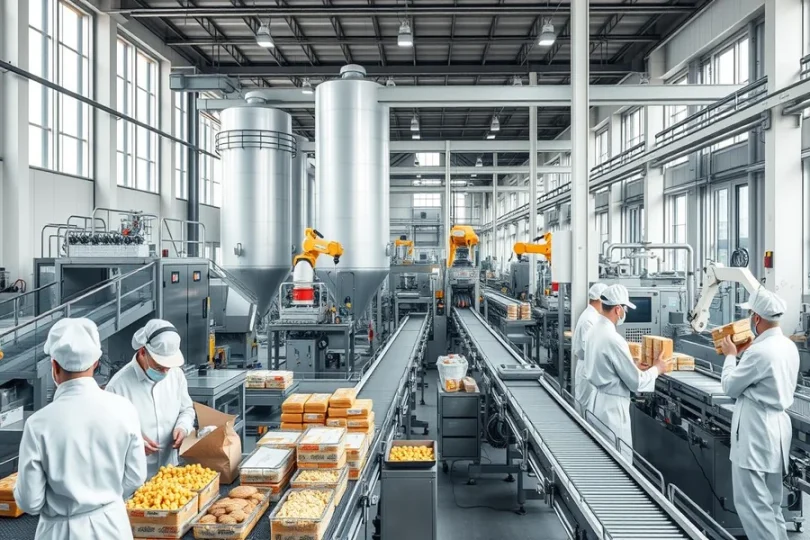

Food production has become increasingly complex. Global demand, strict hygiene regulations, and rising expectations around traceability have reshaped how facilities are designed and operated. Modular processing units—commonly referred to as skids—have become central to this shift. When integrated with automation systems, they allow manufacturers to scale output while maintaining consistent quality and compliance.
Today, innovation in custom food processing skids and automation solutions is driven by countries that combine engineering capability, regulatory discipline, and advanced manufacturing ecosystems. These nations are shaping how modular systems are designed, fabricated, and deployed worldwide.
Below are seven countries leading the way in this specialized industrial segment.
1. United States
The United States has long been a leader in food processing technology. Its diverse agricultural base and large-scale food production industry create constant demand for high-performance modular systems.
Manufacturers in the U.S. emphasize:
- Hygienic stainless-steel fabrication
- Advanced programmable control integration
- Compliance with stringent food safety regulations
The U.S. Food and Drug Administration enforces strict food processing standards, encouraging innovation in sanitary design and automated monitoring.
U.S.-based providers of custom food processing skids and automation solutions often integrate data tracking and remote diagnostics into modular platforms, supporting both efficiency and regulatory oversight.
2. Germany
Germany is known for precision engineering and industrial automation. Its food processing sector benefits from deep expertise in control systems and mechanical design.
German manufacturers focus on:
- High-tolerance fabrication
- Energy-efficient process design
- Integration with Industry 4.0 frameworks
Skid-mounted systems from Germany often feature advanced sensor integration and seamless compatibility with digital production management platforms.
3. Netherlands
Despite its relatively small size, Netherlands plays an outsized role in global food technology innovation.
The country’s expertise in dairy processing, horticulture, and sustainable agriculture has driven demand for modular, automated systems.
Dutch manufacturers emphasize:
- Compact skid designs for space optimization
- Water-efficient processing solutions
- Rapid deployment capabilities
Innovation here often centers on balancing productivity with sustainability.
4. Japan
Japan combines compact engineering design with advanced robotics. In food processing, this translates into highly integrated skid systems that prioritize precision and consistency.
Japanese innovation frequently includes:
- Miniaturized automation components
- High-speed processing modules
- Robust quality assurance integration
Automation in Japan often reflects the country’s emphasis on efficiency within limited space environments.
5. Italy
Italy has strong expertise in food production equipment, particularly in dairy, pasta, and beverage processing.
Italian manufacturers of custom food processing skids and automation solutions emphasize:
- Flexible design for specialty production
- Modular systems adaptable to artisan and industrial scales
- Aesthetic yet functional fabrication
Italy’s food heritage influences the need for both scalability and preservation of product authenticity.
6. China
China has expanded rapidly in industrial manufacturing capacity, including food processing equipment.
Chinese innovation focuses on:
- High-volume production capability
- Competitive cost structures
- Expanding automation integration
As domestic food safety standards tighten and export markets grow, Chinese manufacturers continue improving automation sophistication and sanitary design compliance.
7. Denmark
Denmark has a strong reputation in dairy and meat processing technology. Danish firms are particularly active in designing modular systems for global export.
Innovation trends in Denmark include:
- Sustainable process engineering
- Integrated heat recovery systems
- Automated cleaning-in-place configurations
Denmark’s commitment to environmental efficiency influences skid system design across multiple markets.
Why These Countries Lead
Several shared factors contribute to leadership in custom food processing skids and automation solutions:
- Strong regulatory frameworks driving sanitary innovation
- Advanced engineering education systems
- Mature industrial automation sectors
- Export-oriented manufacturing ecosystems
Countries combining these elements create environments where modular processing and automation technologies evolve quickly.
Skid-mounted systems allow global manufacturers to:
- Reduce installation time
- Improve scalability
- Maintain consistent processing parameters
These advantages align with the operational priorities of modern food producers.
The Global Impact
As supply chains become more interconnected, manufacturers often integrate components or engineering expertise from multiple countries. Innovation in one region influences standards elsewhere.
For example:
- German automation principles influence control logic worldwide
- U.S. regulatory standards shape sanitary design expectations
- Dutch sustainability practices inform water and energy optimization
This cross-border exchange strengthens the overall ecosystem of modular food processing innovation.
Conclusion
Innovation in custom food processing skids and automation solutions is not confined to one region. Countries such as the United States, Germany, the Netherlands, Japan, Italy, China, and Denmark are shaping how modular food production systems are engineered and deployed.
Global leadership in this sector reflects a combination of regulatory rigor, engineering excellence, and automation expertise. As food production demands continue to rise, the influence of these nations will remain central to the evolution of modular, automated processing environments.
Manufacturers seeking scalable, efficient, and compliant systems increasingly look to global benchmarks established by these leaders in custom food processing skids and automation solutions