
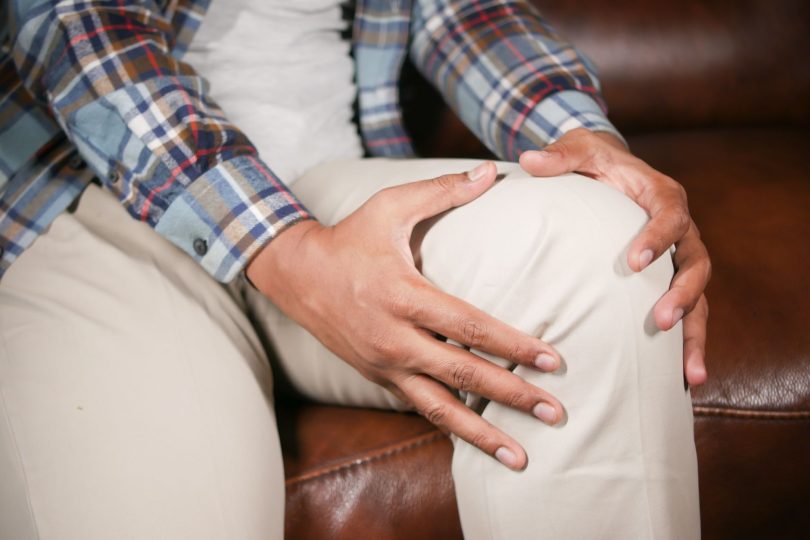

Chronic knee pain has been a constant and uninvited companion to the majority of people. It is not a sudden arising issue but rather a long underlying issue that had gone unnoticed.
It may be observed after simple activities like climbing stairs or taking a morning walk. Some turn towards the immediate support available in the market. They are known as compression sleeves or knee caps.
Compression knee caps offer a simple and continuous pressure to manage this discomfort. It helps by reducing the swelling and stabilizing the joint movements.
By understanding the key factors causing chronic knee pain, we can figure out the role of compression knee caps in effectively reducing it. This blog will help you choose the right choice for the underlying problem.
Let’s dive in!
What is chronic knee pain?
Chronic knee pain is known as prolonged discomfort and swelling persisting for months or sometimes even years. Chronic pain rarely goes away on its own without any proper aid. This prolonged effect triggers cartilage wear and increases the joint pain.
Causes of Chronic Pain In The Knees
Chronic pain is usually the result of ongoing inflammation or any unhealed past trauma.
- Osteoarthritis
It occurs when the protective cartilage around the bone ends up thinning, leading to friction in between bone joints. This results in stiffness and deep aching.
- Tendinitis & Bursitis
Repetitive overuse and friction can cause ongoing inflammation in the tendons or the fluid filled swellings called bursae.
- Untreated Past Injuries
A torn meniscus and cartilage and old ligament strain can result in chronic ache. No proper healing can permanently affect the joint alignment, thus causing unstable joints.
- Systemic Inflammatory Conditions
Diseases like rheumatoid arthritis, an autoimmune disorder or gout cause the joint lining to become repeatedly thinned out. This causes swollen and painful knee caps.
Common Symptoms
People experiencing chronic knee pain don’t just feel a simple dull ache. They often experience a cluster of mechanical and inflammatory symptoms which includes
- Morning stiffness that makes the joint feel stiffened for the first 30 minutes after waking up.
- A dull and constant ache that converts into a sharp, stabbing sensation during any physical activity.
- Chronic swelling and localized heat that lingers even after resting.
- Clicking, popping or crunching sounds accompanied by discomfort when bending the leg.
How Compression Sleeves Help In Chronic Pain?
Compression helps relieve chronic knee pain by using external pressure to improve blood flow. It will further help to reduce joint swelling and pain. Compression makes a chronic condition feel more manageable because of:
- Nervous system activation
The snug mild pressure of a compression knee cap sends constant signals to the brain. These signals are interpreted more as compared to dull chronic pain signals. Thus, it effectively lowers the sensitivity of the ache.
- Hydrostatic Swelling Reduction
Chronic joint issues like osteoarthritis cause fluid accumulation in the knee masking it hard to bend. The elastic material creates a pressure gradient pushing away the inflammatory fluids out of the joint area, Thus, effectively reducing the swelling too.
- Enhanced Blood Flow & Oxygenation
The localized pressure increases circulation and brings fresh oxygen to the affected area. It helps in the healing of irritated tendons and muscles surrounding the joint while also clearing out any metabolic waste like uric acid.
- Heightened Awareness
The fabric stimulates the nerve receptors in the skin. This gives the brain knee’s exact position. This automatically improves balance and stability.
- Muscle Activation
The knee cap gives the surrounding muscles support to contract. This stabilizes the patella and helps them in supporting the joint more efficiently. Thus, reducing the overall workload on injured cartilage.
Types Of Compression Knee Caps
| TYPE | What is it | Best for | Main Benefit |
| Elastic knit | Lightweight and breathable stretchy fabric | Mild daily stiffness | Comfortable to wear all day |
| Neoprene | Thick and rubbery material | Morning stiffness & cold weather | Traps heat to warm up the joint |
| Medical Knit | Premium and custom-shaped fabric | Moderate arthritis pain | Gives high-quality and targeted pressure |
| Closed Patella | Fully covers the whole knee | General aching and swelling | Maximum swelling reduction |
| Open Patella | Has a cutout hole for the kneecap | Pain right behind the kneecap | Relieves pressure on the kneecap |
| Gel-Padded | Has a built-in silicone ring around the hole | Kneecap tracking issues and shock absorption | Keeps the kneecap centered and stable |
| Flexible Side Stays | Has bendable plastic or metal strips on the sides | Extra joint weakness | Keeps the cap from sliding or rolling down |
How to properly use compression knee caps?
- Find the Right Fit (Crucial)
A sleeve that is too loose won’t help in chronic pain relief, while one that is too tight can cut off blood flow and actually can increase discomfort in the lower leg.
- How to measure
Measure the circumference of your thighs at about 10 to 15 cm (4 to 6 inches) from the centre using a flexible tape. Always match the readings to the size chart of specific brands.
- The “Two-Finger” Rule
When you put it, you should be able to slide two fingers comfortably under both top and bottom bands. If it leaves deep, painful red marks or causes your lower body to throb, tingle or change color, it is too tight.
2. Time Your Wear Correctly
- Wear it during activity
Put the sleeve on before you start doing activity. This prevents the pain from building up in the first place.
- Keep it on for recovery
Leave it on for 1 to 2 hours after activity while your body cools down.
- Take it off to rest
Do not wear a knee cap for pain relief while sleeping or resting. When you are laying, gravity is no longer pulling fluid down, so the sleeve is unnecessary and can restrict resting blood circulation.
3. Put It On Correctly
- Center the kneecap
Most sleeves have a woven circular pattern, a gel ring or a lighter patch of fabric. Ensure this sits perfectly centered right over your patella.
- Smooth out the fabric
Pull the fabric up smoothly with no wrinkles, which can cause skin irritation or excess pressure
4. Combine It with Elevation
Compression works best when paired with gravity. If you observe your knee to be swollen, put the sleeves on and lie down with your leg up on a pillow so your knee sits higher than your heart. This will help the trapped fluid to flow out of the joint.
Conclusion
Chronic knee pain is an ongoing issue. With no proper management, it can lead to the issue being flared up. A compression knee cap for pain relief is the best choice to handle it. It can provide ease of movement throughout the day. Also, it will give your knees better stability and mild support that your chronic knee pain needs.
Incorporate it alongside proper treatment for best results. A proper fit and compression is ideal to make the best knee cap for pain relief in the longer run. Always treat it as an additional support and not an ultimate solution.
