
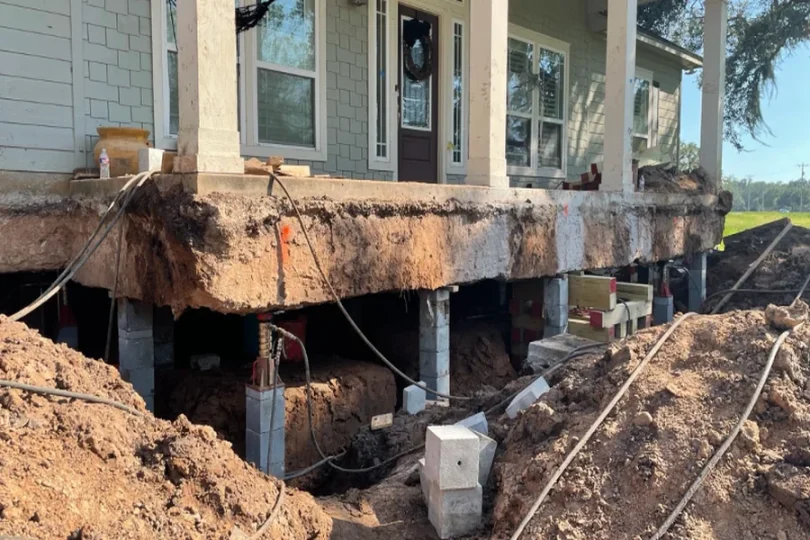

Slab-on-grade homes sit on a single concrete slab poured directly on prepared soil, often with thickened edges and load-bearing areas under interior walls. This design can perform well, but repair challenges arise when the soil beneath the slab changes volume or loses support. Because the slab is one connected plate, movement in one zone can tug or tilt another, creating a pattern of diagonal cracks, uneven floors, and doors that swing or stick. Repairs are also harder to hide in slab homes because plumbing lines often run through or under the slab, and interior finishes sit directly on the concrete. If you lift or stabilize one part of the slab, stress can be transferred to the brittle tile, drywall seams, and cabinet joints. Another complication is that slab symptoms can arise from multiple sources simultaneously, such as expansive clay cycles, poor drainage, plumbing leaks, or inadequate compaction under a fill area. Slab repair planning works best when the root cause is identified first, and the sequence of drainage correction, leak repair, and stabilization is chosen to minimize post-completion movement.
What makes slab repairs tricky
-
Diagnosing the true driver of movement
The first challenge is diagnosis, because slab movement can look the same even when the cause is different. Expansive soils undergo seasonal heave and shrinkage, while poor drainage can cause washout, voids, and settlement. A plumbing leak under the slab can soften soil and remove fines, causing localized sinking that mimics general settlement. Tree roots can also dry soil unevenly, pulling moisture from one side and creating differential movement. The only way to plan a durable fix is to connect symptoms to soil and water conditions around the home. That usually involves checking grading, downspout discharge, and irrigation patterns, then looking for signs of plumbing leaks such as unexplained water bills, warm spots on floors, or persistent damp smells. Elevation measurements across the slab can show where the high and low points are, which helps identify whether the issue is perimeter-driven, interior-driven, or both. Many homeowners contact AAA Foundation Service after noticing recurring door misalignment or tile cracks that worsen after certain seasons, because those repeating patterns suggest ongoing soil movement rather than a one-time settling event.
-
Limited access and the risk of interior disruption
Slab-on-grade homes provide limited access to the underside of the foundation, so repairs must be performed from the perimeter, through drilled holes, or by selective interior access. This restriction makes it harder to address every weak zone evenly, especially when movement occurs under interior load-bearing walls. If piers are installed along the perimeter, they can stabilize edges, but interior areas may still move if soil conditions persist. If interior piers are needed, crews may need to cut flooring, move furniture, and drill through the slab, creating additional disruption and requiring careful restoration afterward. This is why sequencing matters. Fixing drainage and moisture control before stabilization reduces the risk that new piers lock the slab into a position that later shifts as the soil continues to swell and shrink. Interior finishes are another risk. Tile, stone, and rigid flooring can crack when the slab is lifted or adjusted, and cabinets may shift if the slab changes elevation. A realistic plan includes a discussion of cosmetic repairs that may follow structural stabilization, so homeowners are not surprised by what the slab movement reveals in walls and finishes.
In addition to addressing foundation repair challenges, homeowners should consider the benefits of crawl space waterproofing to prevent mold in Springfield homes. This proactive measure not only safeguards the structural integrity of the property but also enhances indoor air quality by reducing moisture levels. By implementing effective waterproofing solutions, homeowners can mitigate the risk of mold growth, which is often exacerbated by the humid conditions typical in slab-on-grade homes. Taking these steps ensures a healthier living environment and can prevent costly repairs in the future, making it a wise investment for any property owner.
-
Plumbing under the slab and leak-related settlement
Plumbing is a major slab-on-grade challenge because many water supply and drain lines are buried under or within the slab. If a leak develops, the soil can become saturated, lose bearing capacity, and undergo settlement in a localized area. This is often called a localized drop, and it can create cracks that radiate outward from one zone. Repairs can be complicated because the structural and plumbing fixes must work together. If you stabilize the slab without fixing the leak, movement can continue and may undermine the repair. If you fix the leak but ignore the voids or softened soil, settlement can persist. Under-slab leaks also create diagnostic confusion because symptoms can appear far from the leak source as water migrates along the path of least resistance. Proper testing may include pressure tests, camera inspections, or leak-detection methods to locate the problem before cutting concrete. Once the plumbing is repaired, soil stabilization or void filling may be needed to restore support. Slab repair planning should always include a clear approach to plumbing risk, because ignoring it is one of the fastest ways to see movement return.
Slab-on-grade foundations present unique obstacles for homeowners because the plumbing and electrical systems are often embedded directly within the concrete. When shifting occurs, these utility lines can become compromised, leading to leaks that are difficult to detect without specialized equipment. If you are noticing cracks in your flooring or unexpected damp spots, it might be time to click for details regarding professional evaluation and structural reinforcement options. Addressing these issues early can prevent the need for more invasive tunneling or demolition, preserving the integrity of the property. Local climate factors and soil composition further complicate these repairs, necessitating a tailored approach to ensure long-term stability and safety for the household.
A clear path through slab repair challenges
Foundation repair challenges in slab-on-grade homes come from the slab acting as one connected plate over soil that can swell, shrink, or lose support. Diagnosis is critical because similar cracks can be caused by very different drivers, including expansive clay cycles, drainage washout, or under-slab plumbing leaks. Access limitations make repairs more disruptive, especially when interior stabilization is needed, and finishing materials like tile and cabinetry can be sensitive to lifting or adjustment. Plumbing under the slab adds complexity because leak repair, void restoration, and stabilization must be coordinated to prevent recurring movement. Repair methods must be matched to the specific pattern of settlement or heave, and water management improvements often determine whether the fix remains stable. With careful sequencing, realistic expectations about cosmetic follow-up, and consistent moisture control around the perimeter, homeowners can address slab movement effectively and reduce the chance that the same symptoms return season after season.