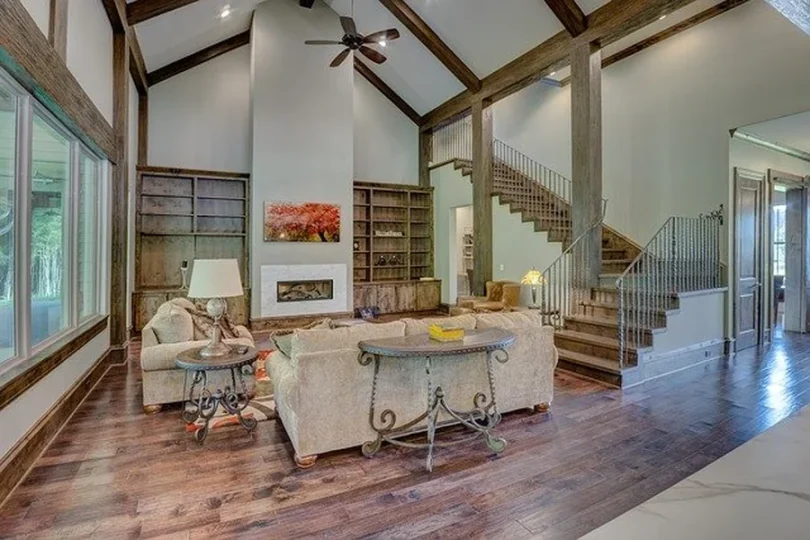

High-ceiling spaces look impressive, but they create airflow challenges that standard HVAC layouts often struggle to handle. When a room has vaulted ceilings, two-story great rooms, lofts, or open stairwells, air can stratify, meaning warmer air collects near the top while the occupied zone near the floor feels cooler in winter and sometimes uneven in summer. Large volumes also affect how quickly the temperature responds, so short cycles may not mix the air enough to feel consistent. The thermostat may be located in a hallway or at a lower level, reading one condition while the upper portion of the room behaves differently. Managing airflow in these spaces is less about turning the system up and more about guiding where supply air goes, how it returns, and how the room mixes air throughout the day. Contractors typically address this with a combination of register placement, return strategy, fan control, and duct tuning, often paired with envelope improvements that reduce heat loss at high walls and large glazing areas.
Control mixing and stratification
-
Why high ceilings cause stratification and comfort swings
Stratification happens because warm air is buoyant and rises, especially in rooms with tall ceilings and open vertical pathways. During the heating season, the furnace may deliver warm air, but much of that heat can rise and remain trapped near the ceiling, leaving the seating area cooler even while the thermostat is satisfied. In the cooling season, the opposite can occur in certain layouts: cool air can settle low, but solar gain through upper windows and skylights can heat the top layer, creating a warm cap that makes the room feel inconsistent. High ceilings also increase surface area, and tall exterior walls often include more windows, which increases heat gain in summer and heat loss in winter. The HVAC system may be sized to meet the peak load, yet still feel uneven because air is not being mixed effectively. This is why people in great rooms often notice cold floors, drafts near stairs, or a persistent warm band near loft railings. Recognizing the role of stratification helps homeowners understand why comfort issues are not always equipment failures. The solution often lies in airflow direction, return placement, and the creation of controlled circulation patterns that keep the occupied zone stable without forcing extreme thermostat settings.
Achieving consistent temperature levels in rooms with dramatic verticality requires more than just high-capacity equipment; it demands a strategic approach to air distribution. When cool air is introduced into these expansive volumes, it often struggles to displace the stubborn pocket of warmth that naturally settles near the peak. Homeowners who take the time to Learn more about the physics of air buoyancy can better appreciate why specialized register placement and high-side returns are necessary components of a balanced system. By intentionally directing airflow to disrupt these thermal layers, you can eliminate the stagnant zones that typically make lofts feel disconnected from the primary living space, ultimately ensuring every cubic foot remains usable throughout the peak summer months.
Incorporating advanced HVAC systems can significantly enhance comfort in high-ceiling spaces. By utilizing variable air volume systems, you can adjust airflow based on occupancy and temperature changes, ensuring consistent comfort. Additionally, integrating smart thermostats allows for precise control over the environment, adapting to your specific needs. For those seeking expert guidance on optimizing HVAC performance, Click here to explore innovative solutions tailored to your space. Emphasizing energy efficiency not only reduces costs but also contributes to a sustainable environment. With the right approach, maintaining a comfortable atmosphere in expansive areas becomes a seamless experience, enhancing both functionality and enjoyment.
-
Supply and return strategies that improve mixing
Effective airflow management starts with how supply air is delivered into the space. In high-ceiling rooms, supply registers should often be aimed to promote mixing across the ceiling plane rather than dumping air straight down. During the cooling season, directing supply air along the ceiling can achieve a longer throw that spreads cool air and reduces hot spots caused by solar gain. During the heating season, supplies placed on exterior walls or near glazing can help warm cold surfaces and reduce downdrafts, but the airflow still needs to mix rather than short-circuit to the nearest return. Return placement is critical because a single return low on a wall may not capture the warm air pooling near the top, while a return high on the wall can help pull that warm layer down into circulation. Some designs use multiple returns at different heights or a high return with a low return to manage seasonal needs. A skilled HVAC contractor in Portland may also evaluate how open stairwells and loft openings act like chimneys, pulling air away from the occupied zone, then adjust return locations or add transfer pathways to guide circulation. The goal is to create a predictable loop: supply air spreads and mixes, then returns without leaving stagnant layers behind.
-
Using ceiling fans, destratification fans, and blower settings
Fans are often the most visible tool for high-ceiling comfort, but they work best when matched to the season and the room’s airflow pattern. In summer, ceiling fans can push air downward to improve comfort at the seating level without lowering the thermostat dramatically. In winter, many fans can be set to reverse and run at a low speed, gently pulling air upward and pushing warm air outward along the ceiling and down the walls, reducing the warm layer at the top without creating a draft. For very tall spaces, dedicated destratification fans can move air from high to low more effectively than standard ceiling fans. HVAC blower settings also matter. A low, continuous fan mode can improve mixing and reduce temperature layering, though it can increase electricity use and must be balanced with humidity needs during the cooling season. If the blower is set too high, it can create drafts and reduce moisture removal. If it is too low, the room may stratify more. Contractors often tune fan profiles so the system maintains comfort with steady circulation, particularly during shoulder seasons when the equipment runs less, and stratification becomes more noticeable.
Incorporating smart thermostats and zoning systems can significantly enhance the efficiency of HVAC systems in high-ceiling spaces. These technologies allow for precise control over temperature settings, ensuring that each area of a large room maintains optimal comfort levels. Additionally, regular maintenance and timely inspections are crucial to prevent any airflow issues that might arise. For those looking to delve deeper into effective HVAC management strategies, it’s beneficial to get info from industry experts who can provide tailored solutions and insights. By staying informed and proactive, you can ensure that your HVAC system operates smoothly, providing comfort and efficiency year-round.
Managing HVAC airflow in high-ceiling spaces requires controlling stratification, guiding supply and return pathways, and supporting air mixing so the occupied zone stays comfortable. High ceilings create vertical temperature layers, and without proper circulation, warm air can pool overhead in winter while solar gain can heat upper zones in summer. Contractors address this through register aiming, return placement, fan and blower strategies, duct balancing, and sometimes zoning to match the unique load of large-volume rooms. Envelope improvements, such as air sealing and window shading, reduce the load that drives layering and make airflow solutions more effective. With measured adjustments and thoughtful circulation planning, high-ceiling rooms can feel consistent without constant thermostat changes or excessive runtime.