
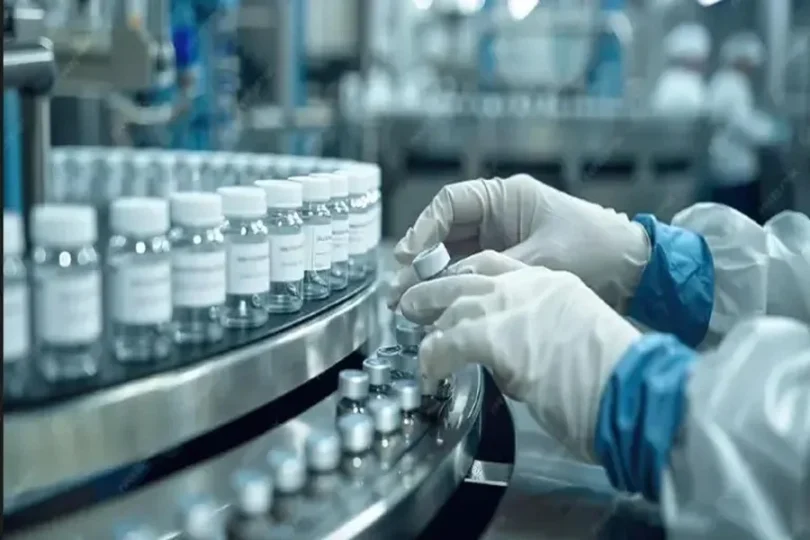

Peptide-based therapeutics are emerging as an important class of new medicines, ranging from metabolic disease drugs to innovative cancer treatments.
Developing these complex molecules and bringing them to market is no small feat. This is where peptide CDMOs, specialized Contract Development and Manufacturing Organizations, play a pivotal role.
They provide the expertise and infrastructure to develop and manufacture peptide drugs, and their importance is growing as peptides gain prominence in pharmaceutical pipelines.
Understanding Peptide CDMOs
A peptide CDMO is a service partner that focuses specifically on peptide therapeutics. They offer end-to-end support from drug development through scale-up and commercial production, but with a deep specialization in peptides. In practice, a peptide CDMO’s responsibilities span multiple areas:
- Custom Peptide Synthesis & Process Development
Designing efficient synthetic routes for the target peptide. They optimize coupling steps, deprotection strategies, and other chemistry to improve yield and purity. This often involves method development to handle unique amino acids or modifications in the peptide structure. - Scale-Up & GMP Manufacturing
Translating a bench-scale synthesis into a Good Manufacturing Practice (GMP) compliant process at a larger scale. Peptide CDMOs have specialized production equipment and expertise in scale-up challenges like longer reaction cycles and preventing sequence-related side reactions. They manage purification steps to isolate the desired peptide from by-products and closely monitor critical quality attributes. - Analytical & Quality Control
Developing analytical methods to characterize the peptide’s identity, purity, potency, and impurity profile. Peptide molecules can have complex impurity profiles that require sophisticated analysis. A peptide CDMO’s analytical labs perform HPLC, mass spectrometry, peptide mapping, and other tests to ensure quality control at every stage. They also carry out stability studies and validate analytical methods as part of the development process. - Supply Chain Management
Peptide production relies on many specialized inputs – dozens of protected amino acids, coupling reagents, linkers, resins, solvents, etc. A dependable peptide CDMO ensures a stable supply chain of these high-quality raw materials. Managing sourcing and inventory of costly building blocks is critical to avoid delays. - Regulatory and Documentation Support
Given their experience, peptide CDMOs help compile the necessary Chemistry, Manufacturing, and Controls (CMC) documentation for regulatory filings. They understand regulatory expectations around peptide impurity characterization, batch records, validation reports, etc., and can assist sponsors in navigating regulatory scrutiny over peptide quality. By partnering with a CDMO that has prior approvals, drug developers can benefit from smoother interactions with agencies.
Why Peptide CDMOs Matter for New Medicines
The involvement of a peptide CDMO has become increasingly crucial as peptide therapeutics move to the forefront of drug development. Here’s why these specialist partners matter so much for new medicines:
1. Peptide Drugs are a Growing Segment of the Pipeline
Peptides have gained traction due to their potent and selective biological activity, often hitting targets that small molecules or larger biologics cannot.
Today, there are hundreds of peptide drug candidates in development globally. This surge spans multiple areas, including metabolic diseases, oncology, and autoimmune conditions, among others, and represents a significant share of innovative new medicines.
To support this pipeline, manufacturing capacity and expertise for peptides must expand accordingly. Pharmaceutical and biotech firms increasingly turn to CDMOs to produce these molecules, given the complexity and capital intensity involved
2. Specialized Expertise for Complex Chemistry
Peptide manufacturing is inherently challenging, which is why not all companies do it in-house. Synthesizing even a medium-length peptide involves dozens of iterative chemical steps, and the process can be fraught with pitfalls like incomplete couplings or chain aggregation.
Longer peptides, especially, can suffer from synthetic inefficiencies – e.g., sequences tend to aggregate during assembly, reducing yields, and side reactions or deletions can create hard-to-remove impurities.
A peptide CDMO brings a wealth of experience in tackling these challenges. They know how to tweak chemistry conditions to improve coupling efficiency, when to apply strategies like pseudoproline insertion or fragment condensation for difficult sequences, and how to streamline purification.
3. Access to Scale and Advanced Technologies
The rise of peptide medicines has also meant a need for massive scale-up in manufacturing. Certain new drugs (like peptide hormone analogs for obesity and diabetes) are poised to be produced in very large quantities to meet global demand.
For instance, GLP-1 receptor agonist peptides (such as semaglutide and tirzepatide) have become blockbuster therapies, with the market for GLP-1-based drugs projected to surpass $150 billion by 2030. Manufacturing such high volumes of peptides cost-effectively requires specialized infrastructure. Peptide CDMOs around the world are responding by investing heavily in expansion.
Leading players have announced hundreds of millions in new investments to add large-scale peptide synthesis lines and downstream processing capacity. This kind of capacity and cutting-edge technology (automation, high-throughput purification, etc.) is usually beyond the reach of individual pharma companies to develop on their own.
Partnering with Peptide CDMOs for Success
Thanks to partnerships, promising peptide treatments for diseases like diabetes, obesity, cancer, and rare diseases are reaching clinical trials and ultimately patients faster and more reliably. Importantly, CDMOs bring a level of manufacturing rigor that ensures new medicines are safe, effective, and available at the scale needed once approved.
Moreover, the peptide CDMO industry itself is rapidly evolving to support innovation. The strong demand for peptide APIs has driven CDMOs to expand capacity globally and to adopt novel technologies.
Drug developers in 2025 and beyond have more outsourcing options. Partnerships between pharma and specialized CDMOs will boost innovation and efficiency, enabling faster development of peptide-based medicines at a larger scale.
As peptide therapeutics continue to rise, companies looking to develop these drugs would benefit greatly from the support of an experienced CDMO. Neuland Labs is a leading peptide CDMO that offers integrated development and manufacturing services in this arena.
With 4 decades of peptide chemistry experience, state-of-the-art GMP facilities, and a track record of successful projects, Neuland Labs has enabled numerous peptide-based drugs to advance from concept to market. Check out Neuland Labs to learn about their capabilities and support for your peptide drug development.
FAQs
How does a peptide CDMO differ from a general CDMO?
A peptide CDMO specializes in synthesizing, scaling, and characterizing peptide-based APIs. Unlike general CDMOs, they bring tailored expertise in peptide chemistry, purification, and regulatory expectations specific to peptide therapeutics, which have unique manufacturing challenges.
What role do peptide CDMOs play in early-stage clinical trials?
In early trials, peptide CDMOs produce small GMP batches, validate analytical methods, and ensure regulatory compliance. Their involvement helps establish reliable processes, ensuring consistent quality and timely delivery of peptide APIs for first-in-human studies.
Why is peptide purification such a critical capability for CDMOs?
Peptide synthesis often creates impurities like truncated or miscoupled sequences. A skilled peptide CDMO provides large-scale purification (e.g., preparative HPLC) to achieve high purity standards required for clinical and commercial-grade APIs.
How do peptide CDMOs support scalability for new-to-the-market drugs?
When peptide drugs show strong clinical promise, peptide CDMOs scale production from grams to kilograms. They invest in larger synthesis reactors, high-throughput purification, and supply chain resilience to meet global demand for commercial medicines.